AI in Cybersecurity: How Artificial Intelligence Is Changing Threat Detection
05 Feb 2026
Category: Cyber Security
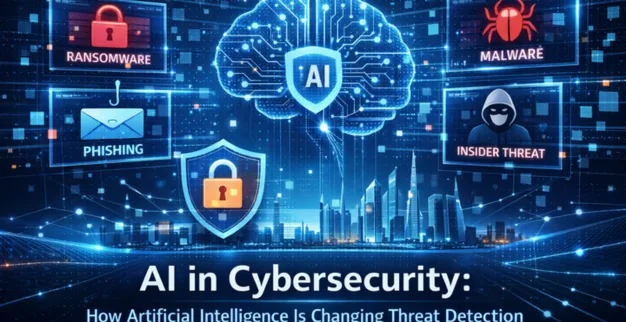
Cyberattacks have reached their fastest growth stage in history. Organizations face major threats including ransomware, phishing, malware infections, and insider threats. These can cause data breaches, operational failures, and reputational harm. Traditional cybersecurity systems struggle because they rely on fixed procedures and slow human monitoring, which cannot keep up with modern threats.
Artificial Intelligence (AI) in cybersecurity changes the game. AI enables proactive security by analyzing large datasets, identifying suspicious activity, and forecasting potential breaches. AI solutions allow companies to respond faster, minimize risks, and secure their digital assets.
How AI Is Transforming Threat Detection
1. Faster Threat Detection
AI can analyze millions of network events in seconds. AI detects threats through its ability to identify unknown patterns which differ from the operational behavior of traditional systems that need predefined rules. The system achieves rapid threat detection which allows attackers to be stopped before they inflict major destruction.
2. Reduces False Positives
False alarms are a common problem in cybersecurity. The AI system reduces unnecessary alerts through its ability to identify genuine security threats from typical system behavior. IT teams can concentrate on actual security threats which results in resource and time savings for the organization.
3. 24/7 Monitoring
Cyber threats don’t follow business hours. AI systems provide continuous network, server and endpoint monitoring throughout every hour of the day. This system provides constant defense against threats which occurs even during times when human staff members cannot work.
4. Predictive Threat Analysis
The learning capability of AI uses machine learning algorithms to study previous attack patterns through historical data. AI uses past incident analysis to create systems which detect and prevent future threats while businesses secure their operations through proactive security measures.
5. Detects Insider Threats
Insider threats represent a different category of security danger which originates from internal sources. AI protects organizations from insider threats by monitoring staff and device and application behavior for detection. The system works to stop internal security breaches before they develop into serious security incidents.
6. Automated Response
AI cybersecurity tools detect threats through their automatic response function. The system allows users to isolate infected devices, move suspicious content into secure storage, and temporarily restrict access rights. The system achieves threat containment at a faster pace through automated processes which eliminate the need for human presence.
7. Integration with Existing Security Tools
AI technology boosts the operational performance of conventional security systems which includes firewalls and antivirus protection and intrusion detection systems. The tools acquire heightened effectiveness against new security challenges through their capacity to receive intelligence updates and System upgrades
Conclusion
The occurrence of cyber threats has progressed from being infrequent to becoming an ongoing threat that develops new tactics. The implementation of AI technology within cybersecurity systems enables organizations to achieve faster threat identification and defensive measures which operate continuously throughout their systems. Organizations can protect their important information by using AI-powered solutions while decreasing their business risks and maintaining an advantage over cybercriminals.
Take action today: Explore AI cybersecurity solutions today to strengthen your security posture and protect your business in 2026 and beyond