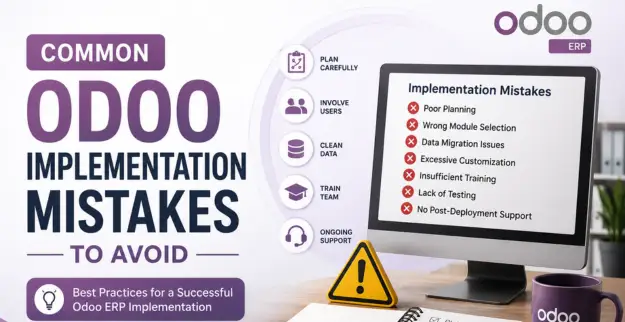
Common Odoo Implementation Mistakes to Avoid
29 July 2026
Introduction
Implementing an Enterprise Resource Planning (ERP) system is a significant step toward improving business efficiency and streamlining operations. However, many organizations fail to achieve the expected results because of poor planning, inadequate training, or incorrect system configuration. While Odoo ERP is known for its flexibility and scalability, a successful Odoo implementation requires careful planning and execution.
Understanding the common ERP implementation mistakes can help businesses avoid unnecessary delays, increased costs, and operational disruptions. Whether you're planning a new Odoo ERP implementation or upgrading an existing system, following proven best practices can significantly improve your project's success.
Why Implementations Fail
Many ERP projects encounter challenges not because of the software itself, but because of poor implementation strategies.
Some of the most common reasons include:
- ✔ Lack of clear business objectives
- ✔ Poor project planning
- ✔ Inadequate user involvement
- ✔ Insufficient employee training
- ✔ Poor data quality and migration
- ✔ Choosing the wrong implementation partner
- ✔ Lack of post-deployment support
Recognizing these challenges early helps organizations develop a smoother and more effective implementation strategy.
Common Mistakes
Avoiding these common mistakes can greatly improve the success of your Odoo ERP implementation.
1. Not Defining Business Requirements
Starting an implementation without understanding business processes often leads to unnecessary customizations and inefficient workflows.
2. Choosing Too Many Modules Initially
Many businesses try to implement every available module at once. A phased approach is usually more manageable and reduces implementation risks.
3. Ignoring Data Migration Planning
Incomplete, inaccurate, or duplicate data can negatively impact system performance and reporting.
4. Excessive Customization
While Odoo is highly customizable, excessive modifications increase project complexity, implementation time, and future maintenance costs.
5. Lack of Employee Training
Even the best ERP system will fail if employees are not properly trained to use it.
6. Poor Change Management
Employees may resist adopting new processes if communication and change management are neglected.
7. Skipping Testing
Failing to thoroughly test workflows before going live can result in operational disruptions and costly errors.
8. Unrealistic Timelines
Rushing the implementation often compromises quality, resulting in incomplete configurations and unresolved issues.
9. Selecting the Wrong Implementation Partner
An inexperienced implementation partner may not fully understand your business processes or industry requirements.
10. Neglecting Post-Go-Live Support
Many organizations underestimate the importance of ongoing maintenance, system optimization, and user support after deployment.
Best Practices
Following industry best practices helps ensure a successful Odoo deployment.
Recommended Best Practices
- ✔ Define clear business objectives
- ✔ Document existing business processes
- ✔ Select only the modules you currently need
- ✔ Clean and validate data before migration
- ✔ Involve key stakeholders throughout the project
A structured implementation approach minimizes risks and maximizes return on investment.
Implementation Checklist
Use this checklist before starting your Odoo implementation.
Project Checklist
- ✔ Business requirements documented
- ✔ Project scope clearly defined
- ✔ Modules selected
- ✔ Data migration plan prepared
- ✔ Employee training scheduled
Completing this checklist helps ensure a smoother transition to the new ERP system.
Conclusion
A successful Odoo ERP implementation depends on careful planning, realistic expectations, and active involvement from both management and end users. By avoiding common ERP implementation mistakes, businesses can reduce project risks, improve user adoption, and achieve greater operational efficiency.
Frequently Asked Questions
1. What is the biggest mistake during Odoo implementation?
The most common mistake is starting the project without clearly defining business requirements and implementation objectives.
2. How long does an Odoo ERP implementation take?
The timeline depends on the number of modules, business complexity, customizations, and data migration requirements. Small projects may take a few weeks, while larger implementations can take several months.
3. Is employee training important during Odoo implementation?
Yes. Proper user training improves adoption, reduces errors, and helps employees use the system more efficiently.