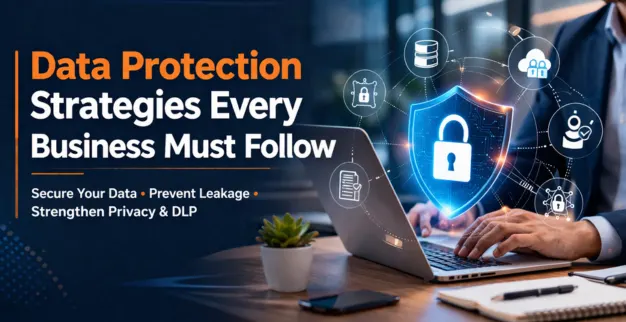
Data Protection Strategies Every Business Must Follow
08 Apr 2026
Category: Cyber Security
Data Protection Strategies Every Business Must Follow
Meta Title: Data Protection Strategies for Businesses | Privacy & DLP
Meta Description: Learn essential data protection strategies, data privacy practices, and data loss prevention methods to prevent data leakage and secure your business information effectively.
In today’s digital world, businesses handle massive amounts of sensitive information every day. From customer details to financial records, protecting this data is no longer optional—it is essential. Effective data protection strategies help organizations prevent breaches, maintain trust, and comply with regulations.
This guide explains the importance of data privacy, risks of data leakage, and practical data loss prevention techniques every business must follow.
Importance of Data Protection
Data is one of the most valuable assets for any organization. Without proper data protection, businesses risk losing critical information, damaging their reputation, and facing legal consequences.
Strong data privacy practices ensure that customer and employee information is handled responsibly. It also builds trust, which is crucial for long-term business success.
Moreover, implementing data leakage protection measures helps organizations safeguard confidential data from unauthorized access and cyber threats.
Risks of Data Leakage
Data leakage is one of the biggest challenges businesses face today. It occurs when sensitive information is exposed intentionally or accidentally.
Some common risks include:
Unauthorized access by hackers or insiders
Weak passwords and poor authentication systems
Misconfigured cloud storage or databases
Phishing attacks and malware
Lack of employee awareness
Without proper data leakage protection, businesses may suffer financial losses, legal penalties, and loss of customer trust.
Data Loss Prevention Methods
To ensure strong data protection, businesses must implement effective data loss prevention (DLP) strategies.
Here are some key methods:
1. Data Encryption
Encrypt sensitive data both at rest and in transit. This ensures that even if data is intercepted, it cannot be read without proper authorization.
2. Access Control
Limit data access based on roles and responsibilities. Use multi-factor authentication (MFA) to strengthen security.
3. Regular Backups
Frequent backups help recover data in case of cyberattacks, accidental deletion, or system failures.
4. Employee Training
Human error is a major cause of data breaches. Train employees on data privacy best practices and cybersecurity awareness.
5. Monitoring & Auditing
Use monitoring tools to track data usage and detect suspicious activities in real time.
6. Endpoint Security
Secure all devices connected to your network to prevent unauthorized access and data leaks.
Implementing these data loss prevention techniques significantly reduces the risk of breaches and ensures business continuity.
Protecting Personal Data
Protecting personal data is a critical part of data protection. Businesses must handle customer information with care and transparency.
Best practices include:
Collect only necessary data
Store data securely using encryption
Follow legal regulations and compliance standards
Provide clear privacy policies
Allow users to control their personal data
Strong data privacy measures not only protect individuals but also enhance your brand reputation.
Conclusion
In an era of increasing cyber threats, businesses must prioritize data protection to stay secure and competitive. By understanding the risks of data leakage and implementing effective data loss prevention and data leakage protection strategies, organizations can safeguard their valuable information.
Investing in the right security measures today will prevent costly incidents in the future and build lasting trust with customers.
FAQ
1. What is data protection and why is it important?
Data protection refers to safeguarding sensitive information from loss, theft, or unauthorized access. It is important to maintain privacy, security, and business continuity.
2. What is data leakage protection?
Data leakage protection involves strategies and tools used to prevent sensitive data from being exposed or accessed by unauthorized users.
3. What are common causes of data loss?
Common causes include cyberattacks, human error, hardware failure, and poor security practices.
4. How does data loss prevention work?
Data loss prevention (DLP) uses tools and policies to monitor, detect, and prevent unauthorized data access or transfer.
5. How can businesses improve data privacy?
Businesses can improve data privacy by using encryption, access controls, regular audits, and employee training.