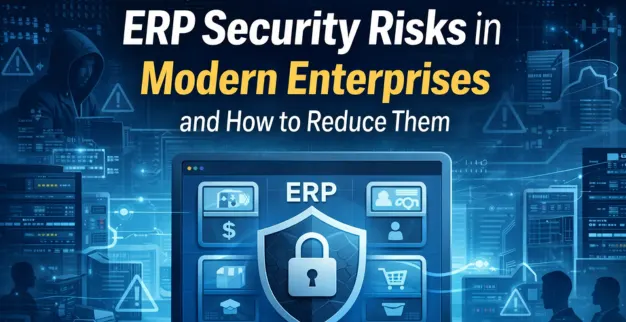
ERP Security Risks in Modern Enterprises and How to Reduce Them
03 Feb 2026
Modern businesses depend heavily on ERP systems to manage finances, HR, inventory, and sales. This system enables efficient business operations which face cyber threats because of insufficient security measures. The article details primary threats together with their effective solutions.
1. Unauthorized Access
The Risk: Employees or outsiders may access data they shouldn’t, like financial records or HR files.
How to Reduce:
- Access should be given exclusively to individuals who require it.
- Strong passwords together with two-factor authentication should be used.
- Access to permissions should be reviewed and updated on a regular basis.
2. Human Mistakes
The Risk: Accidental deletion, misconfigured settings, or sending sensitive data to the wrong person.
How to Reduce:
- Train staff on security best practices.
- Keep audit logs to track changes.
- Access to key operations should be restricted to authorized personnel only.
3. Outdated Software
The Risk: Old ERP versions can have security holes that hackers exploit.
How to Reduce:
- The organization should maintain current ERP software by applying all available patches.
- The organization should partner with vendors who supply continuous security patch updates.
4. Weak Data Protection
The Risk: Data that isn’t encrypted can be stolen or tampered with.
How to Reduce:
- All data including stored information and data in transit should be encrypted.
- Backup systems must be protected to maintain their security.
- Only authorized staff members should have access to encryption keys.
5. Risky Integrations
The Risk: ERP systems often connect with other tools. If those tools aren’t secure, they become an entry point for hackers.
How to Reduce:
- The organization should only implement third-party applications which have been verified as trustworthy.
- The organization needs to conduct regular app permission assessments.
- The organization should restrict system access to essential business functions only.
6. Poor Monitoring
The Risk: Suspicious activity or unusual access might go unnoticed.
How to Reduce:
- The system should send immediate alerts about any abnormal activity.
- The organization needs to perform daily monitoring of essential operations.
7. Lack of Employee Awareness
The Risk: Employees may fall for phishing scams or use weak passwords, putting the entire ERP system at risk.
How to Reduce:
- The organization needs to conduct regular training on phishing and online safety.
- The organization needs to implement strong password policies.
- Employees should report any suspicious behavior without delay.
Key Takeaway
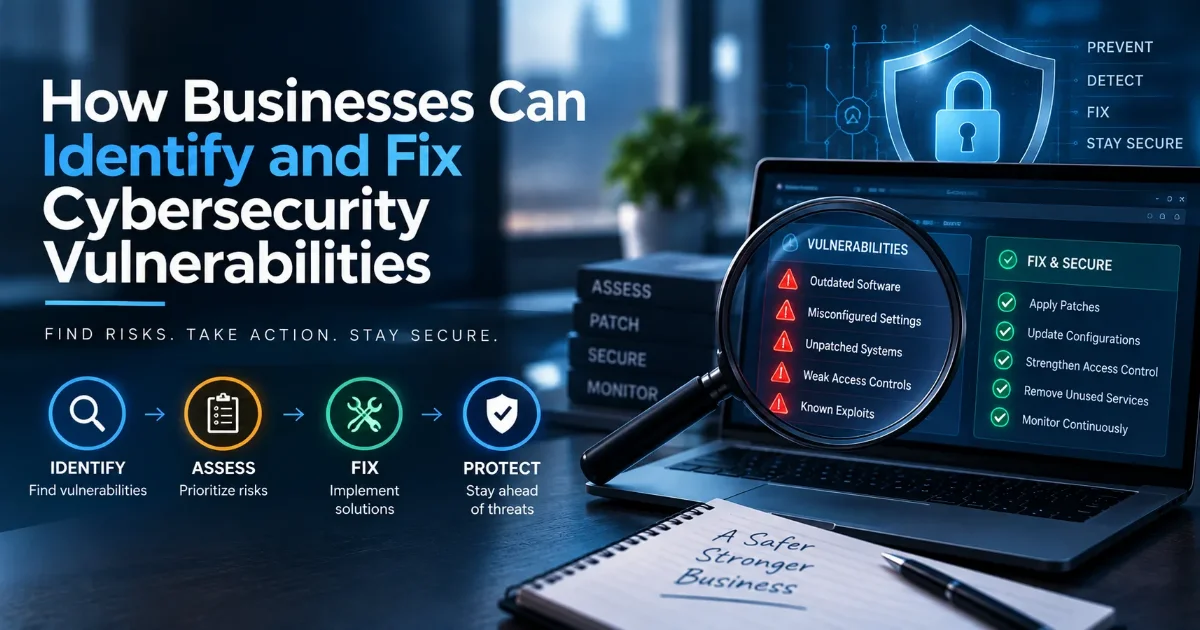
ERP systems support modern business activities yet their implementation creates security vulnerabilities. The combination of access management, software updates, data encryption, system monitoring, and employee training helps businesses decrease ERP security risks.
Agan Cyber Security LLC assists companies in securing their ERP systems along with protecting their confidential information and ensuring operational continuity. A secure ERP requires both technology safeguards and mechanisms which protect businesses against future risks.