Ethical Hacking Training vs Self-Learning: Which is Better?
20 Apr 2026
Category: Cyber Security
With the rising demand for cybersecurity professionals, many aspiring learners are exploring ways to enter the field of ethical hacking. One common question is whether to choose structured ethical hacking training or rely on self-study through online learning.
Both approaches have their advantages, but choosing the right path depends on your goals, learning style, and career plans in cybersecurity training.
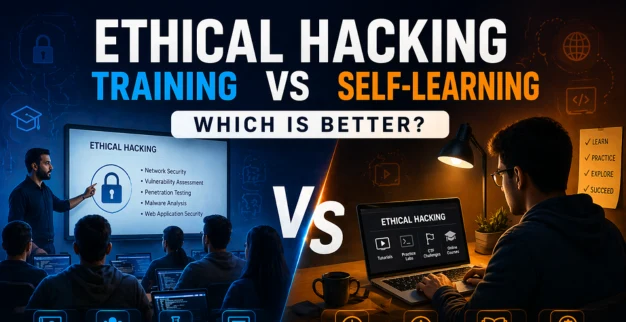
Training vs Self-Learning
Ethical Hacking Training
Structured ethical hacking training programs provide guided learning through expert instructors, hands-on labs, and real-world scenarios. These programs are often part of a professional hacking course designed to build skills step by step.
Self-Learning (Online Learning)
Self-learning involves using online resources, tutorials, and platforms for online learning. It allows learners to study at their own pace without formal guidance.
Both methods can lead to a successful career, but they differ in structure, support, and depth.
Pros & Cons
Ethical Hacking Training – Pros:
- Structured curriculum and clear learning path
- Guidance from experienced instructors
- Hands-on practical labs
- Certification opportunities
- Faster skill development
Ethical Hacking Training – Cons:
- Higher cost compared to self-learning
- Fixed schedules in some programs
Self-Learning – Pros:
- Flexible schedule and pace
- Cost-effective or even free
- Wide range of resources available
- Encourages independent problem-solving
Self-Learning – Cons:
- Lack of structured guidance
- Difficulty in staying consistent
- Limited hands-on experience without proper labs
- No formal certification unless pursued separately
Choosing between ethical hacking training and online learning depends on your commitment and learning preferences.
Best Approach: Hybrid Learning
The most effective way to succeed in cybersecurity training is to combine both approaches.
Why Hybrid Works Best:
- Start with a structured hacking course for strong fundamentals
- Use online learning resources to deepen knowledge
- Practice regularly with real-world labs and challenges
- Stay updated with the latest trends in ethical hacking
This balanced approach ensures both theoretical understanding and practical expertise.
Recommendations
To build a successful career in ethical hacking, consider the following recommendations:
- Beginners should start with professional ethical hacking training
- Use online learning platforms to supplement your knowledge
- Focus on hands-on practice and real-world scenarios
- Pursue certifications as part of your cybersecurity training
- Stay consistent and continuously upgrade your skills
By following these steps, you can effectively grow your expertise and confidence in ethical hacking.
Conclusion
Both ethical hacking training and self-learning through online learning have their benefits. While training provides structure and guidance, self-learning offers flexibility and independence.
The best approach is to combine both methods to create a well-rounded learning experience. With the right strategy, you can build a strong foundation and succeed in the field of cybersecurity training.
FAQ
1. Is ethical hacking training better than self-learning?
Both have advantages, but a combination of training and online learning works best.
2. Can I learn ethical hacking online?
Yes, many platforms offer excellent online learning resources for ethical hacking.
3. Do I need a hacking course to become an ethical hacker?
A structured hacking course helps, but self-learning can also be effective with discipline.
4. Which is faster: training or self-learning?
Ethical hacking training is usually faster due to structured guidance.
5. Is certification important in cybersecurity training?
Yes, certifications add credibility and improve job opportunities.