ISO 27001 Certification Process Explained for Enterprises
18 Mar 2026
Category: Cybersecurity
ISO 27001 Certification Process Explained for Enterprises
Organizations in the modern digital world face challenges because they need to protect large amounts of confidential business and customer information. Organizations need to implement secure data protection measures because these safeguards help them build customer trust while meeting legal requirements and protecting against external cyber threats. The implementation of a security framework enables organizations to conduct efficient risk management procedures.
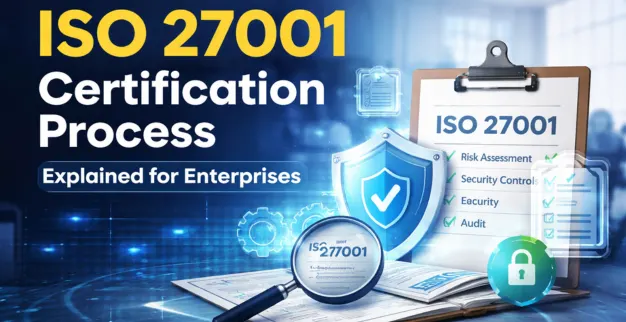
The ISO 27001 certification process provides a globally recognized method for establishing strong information security practices. The framework enables organizations to establish an Information Security Management System (ISMS) which they can use to perform information security audits while following the ISO 27001 compliance checklist to protect their data assets.
What Is ISO 27001 Certification?
The ISO/IEC 27001 standard establishes requirements which organizations need to follow when they create their Information Security Management System (ISMS) implementation. The International Organization for Standardization together with the International Electrotechnical Commission developed this standard.
The certification demonstrates that an organization has implemented proper controls to protect confidential data and manage cybersecurity risks.
ISO 27001 serves three main purposes which include the following objectives:
- Safeguard its sensitive business information which needs protection.
- Identify and control its cybersecurity threats.
- Needs to comply with all applicable legal requirements.
- Needs to improve its information security governance.
Step 1: Define the Scope of ISO Implementation
The ISO 27001 certification process starts with organizations establishing the boundaries of their Information Security Management System.
Organizations must identify:
- The ISMS includes specific departments and systems which organizations need to identify.
- Organizations must identify all business processes which handle sensitive data.
- Organizations must identify all information assets which need to receive protection.
The organization needs to establish scope boundaries which will enable them to achieve their ISO implementation goals.
Step 2: Conduct a Risk Assessment
The security assessment process starts with teams identifying potential security threats and system weaknesses through comprehensive risk evaluations.
The process consists of three distinct stages which include:
- Identifying the organization's most important information assets.
- Involves both identifying security risks which pose a threat and assessing their potential impact on the organization.
- Involves assessing which security incidents will happen and which incidents will cause the most damage.
Risk assessment enables organizations to identify their most important security controls which will help them build a stronger information protection framework.
Step 3: Develop Security Policies and Procedures
Organizations must create security policies which they need to create according to the requirements of ISO 27001 compliance checklist.
The policies can include these elements:
- Access control policies
- Data protection guidelines
- Incident response procedures
- Risk management policies
Documented policies help to protect security through their function of establishing standardized security procedures which employees should implement.
Step 4: Implement Security Controls
Organizations must start their security control implementation process after they finish their policy development work.
The controls include the following components:
- Encryption technologies
- Network security tools
- Identity and access management systems
- Data backup and disaster recovery solutions
The organization improves its information security defense system through the implementation of proper control measures.
Step 5: Employee Training and Awareness
The primary reason cybersecurity incidents occur is due to human error. Organizations need to train their employees about security policies and best practices for protection.
Training programs should cover:
- Data protection responsibilities
- Secure system usage
- Phishing and cyber threat awareness
- Incident reporting procedures
Employee awareness plays a vital role in successful ISO implementation.
Benefits of ISO 27001 Certification
The ISO 27001 certification process provides organizations multiple strategic benefits.
Stronger Data Protection
Structured security controls protect sensitive information through their established methods.
Improved Risk Management
Organizations use cybersecurity risk management to identify and handle potential risks.
Enhanced Customer Trust
The certification shows companies dedication to safeguarding customer information.
Regulatory Compliance
Companies achieve international security and privacy standards through their compliance efforts.
Conclusion
The ISO 27001 certification process uses structured methods to help organizations manage information security risks while protecting their sensitive data. Organizations can create a robust security framework by using an ISO 27001 compliance checklist to conduct their security audits and implement ISO requirements.
ISO 27001 adoption enhances cybersecurity yet brings additional benefits by improving business reputation regulatory requirements and establishing operational resilience for extended periods.