Security Operations Center (SOC): Roles, Teams, and Responsibilities
12 Jan 2025
Category: Security Operation
Cyber Threats in Today’s Digital Age
Cyber threats are no longer something businesses can ignore—they are part of daily operations. Phishing attacks, ransomware, and insider threats can target organizations of any size. This makes a Security Operations Center (SOC) essential. An efficient SOC acts as the backbone of an organization's cybersecurity, ensuring threats are identified, understood, and neutralized before causing harm.
What is a Security Operations Center?
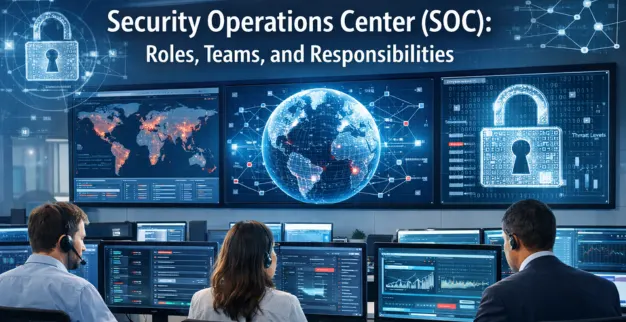
A Security Operations Center is a centralized team responsible for monitoring, detecting, investigating, and responding to cybersecurity incidents 24/7. Using advanced security tools and threat intelligence, the SOC safeguards the organization's IT environment. The primary goal is to maintain business continuity, protect data, and preserve the company's reputation from cyber threats.
SOC Team Structure Explained
A well-functioning SOC team has clearly defined roles and responsibilities. While team composition may vary based on business size and security maturity, most SOCs follow a tiered structure:
- Tier 1 SOC Analysts (Level 1): First line of defense, monitoring alerts and performing initial triage.
- Tier 2 SOC Analysts (Level 2): Investigate incidents, analyze attack methods, and begin containment.
- Tier 3 SOC Analysts (Level 3): Handle advanced threats, conduct threat hunting, and refine detection rules.
- SOC Manager: Provides leadership, strategy, and coordination for the team.
This tiered approach ensures incidents are handled efficiently without overburdening any team member.
Roles of SOC Analysts
SOC analysts form the backbone of the Security Operations Center. They continuously monitor security alerts, analyze logs, identify threats, and escalate incidents when necessary.
Level 1 Analysts: Focus on initial alert monitoring and triage to determine real threats versus false positives.
Level 2 Analysts: Conduct detailed investigations, research attack techniques, and initiate containment measures.
Level 3 Analysts: Handle complex incidents, perform threat hunting, and update detection rules to prevent future attacks.
SOC Manager Responsibilities
The SOC manager plays a crucial leadership role, overseeing the day-to-day operations of the SOC team and ensuring alignment with business objectives. Key responsibilities include:
- Setting security policies
- Improving response workflows
- Liaising with IT and management teams
- Reporting on security posture and incidents
A skilled SOC manager ensures the team operates at peak efficiency and is prepared for evolving threats.
Collaboration Within SOC Teams
Collaboration is essential in a SOC. Teams work closely with IT, network teams, compliance officers, and management. Clear communication and teamwork help resolve incidents quickly and minimize business impact. At Agan Cyber Security, teamwork is embedded in every SOC process.
Why Skilled SOC Teams Matter
Cyber attackers are increasingly sophisticated. Without skilled SOC teams, threats may go unnoticed until they cause significant damage. Experienced SOC analysts reduce response time, control risk, and help organizations maintain trust and compliance.
Learn About Our SOC Team
At Agan Cyber Security, our SOC is run by knowledgeable analysts and security experts dedicated to protecting your business 24/7. Learn how our team helps organizations maintain strong cybersecurity and respond to threats effectively.