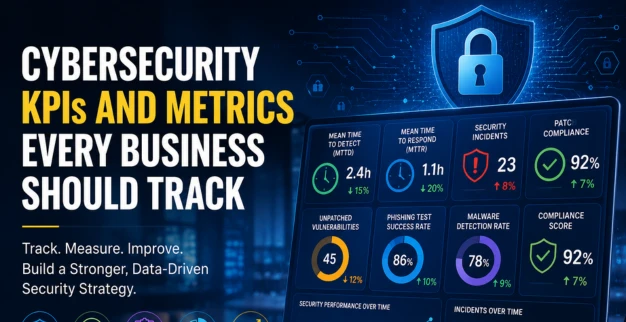


Cybersecurity KPIs and Metrics Every Business Should Track

Cybersecurity KPIs and Metrics

13 May 2026 Ganesan Ganesan

The current business environment depends heavily on digital systems, making cybersecurity a critical function for ensuring operational continuity and data protection. Modern organizations face increasing cyber risks, and without proper measurement, it becomes difficult to evaluate the effectiveness of security controls.

Tracking cybersecurity KPIs and metrics enables businesses to monitor threats, improve response strategies, and strengthen their overall security posture. Just as disaster recovery planning highlights risks like system failures and cyber threats (as shown in your attached document), cybersecurity measurement ensures preparedness and resilience.

What are Cybersecurity KPIs

  • These are measurable indicators used to evaluate how effectively an organization is managing its cybersecurity strategy.
  • While cybersecurity performance metrics provide raw data (such as number of incidents), KPIs align those metrics with business goals to measure success.

  • Examples:

  • Mean Time to Detect (MTTD)
  • Mean Time to Respond (MTTR)
  • Number of security incidents
  • Patch management rate

Importance of Metrics

  • The importance of metrics in cybersecurity lies in providing visibility, accountability, and continuous improvement.
  • Helps identify vulnerabilities and risks early
  • Enables data-driven decision making
  • Supports compliance and audit requirements
  • Improves incident response efficiency
  • Demonstrates ROI of security investments
  • Without proper metrics, organizations operate blindly, increasing exposure to cyber threats.

Key KPIs to Track

Tracking the right cybersecurity KPIs and metrics ensures effective monitoring and control.

Threat Detection Metrics

  • Mean Time to Detect (MTTD)
  • Number of threats identified

Incident Response Metrics

  • Mean Time to Respond (MTTR)
  • Incident resolution time

Vulnerability Management Metrics

  • Number of unpatched vulnerabilities
  • Patch compliance percentage

Endpoint Security Metrics

  • Malware detection rate
  • Number of compromised devices

User Awareness Metrics

  • Phishing test success rate
  • Employee training completion

Compliance Metrics

  • Audit success rate
  • Policy adherence score

Building a Scorecard

  • A cybersecurity scorecard is a structured approach to present and evaluate security performance.
  • Define security objectives aligned with business goals
  • Select relevant cybersecurity performance metrics
  • Establish benchmarks and thresholds
  • Visualize data using dashboards
  • Review and update regularly
  • A well-built scorecard simplifies complex data into actionable insights for management.

Tools for Monitoring

  • Effective monitoring of cybersecurity KPIs and metrics requires the right tools.
  • SIEM tools for log analysis and threat detection
  • EDR solutions for endpoint monitoring
  • Vulnerability scanners for risk identification
  • Security dashboards for visualization
  • SOAR platforms for automated response
  • These tools help organizations continuously track and improve their cybersecurity posture.

Real-Time Issues Faced by Businesses

  • Organizations fail to detect threats early due to lack of proper monitoring metrics
  • Slow incident response leads to financial and reputational damage
  • Unpatched vulnerabilities expose systems to cyber attacks
  • Lack of employee awareness increases phishing risks
  • Poor visibility into security performance results in ineffective decision-making
  • Example: A company experienced repeated cyber incidents but lacked proper cybersecurity KPIs and metrics. After implementing a cybersecurity scorecard, the organization reduced incident response time and improved threat detection significantly through continuous monitoring.

Importance of Cybersecurity KPIs and Metrics

  • Enables proactive threat detection and response
  • Improves overall cybersecurity performance
  • Reduces downtime and financial losses
  • Strengthens compliance and governance
  • Builds trust with customers and stakeholders

Constraints to Consider in Cybersecurity Measurement

  • Limited resources and budget constraints
  • Lack of skilled cybersecurity professionals
  • Difficulty in selecting relevant KPIs
  • Integration challenges with existing systems
  • Rapidly evolving threat landscape

Conclusion

Tracking cybersecurity KPIs and metrics is essential for building a strong security framework. By focusing on cybersecurity performance metrics and developing a comprehensive cybersecurity scorecard, businesses can enhance visibility, improve response times, and reduce risks effectively.

Latest Blog Posts

Cloud Security Challenges and Solutions for Modern Enterprises

By: Ganesan D 27 Jun 2026 Category: Cloud Security

Learn how cloud security, cloud security challenges, and cloud data protection help organizations protect sensitive data, reduce cyber risks, strengthen compliance, and secure modern enterprise cloud environments.

Read more...

The Growing Importance of Zero Trust Security Architecture

By: Ganesan D 25 Jun 2026 Category: Zero Trust Security

Learn how zero trust security, zero trust architecture, and identity security help organizations strengthen access control, protect sensitive data, reduce cyber security risks, and build a more resilient security framework.

Read more...

The Difference Between Threat Hunting and Threat Detection

By: Ganesan D 24 Jun 2026 Category: SOC Monitoring

Learn the difference between threat hunting and threat detection, how SOC monitoring improves threat visibility, strengthens incident response, identifies advanced cyber threats, and enhances overall cybersecurity protection.

Read more...