How Odoo Apps Extend ERP Functionality Without Complexity
By: Ganesan D
27 Dec 2025
Category:
Odoo ERP
Introduction
As businesses grow, their operational needs become more diverse. An ERP system must not only manage core processes but also adapt to changing requirements without becoming complicated or expensive. This is where Odoo apps play a crucial role. Designed to extend ERP capabilities in a simple and scalable way, Odoo apps help businesses enhance functionality while maintaining ease of use.
The Power of Odoo’s Modular Ecosystem
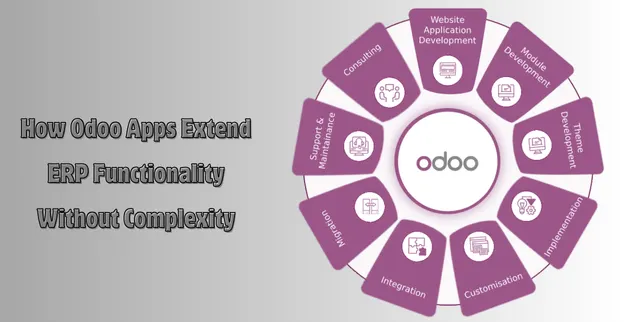
At the heart of Odoo ERP lies its modular architecture. Instead of forcing businesses to use a rigid, all-in-one setup, Odoo allows organizations to select only the applications they need. Each Odoo application focuses on a specific function such as CRM, accounting, inventory, HR, manufacturing, or eCommerce. This approach ensures that businesses build an ERP system that fits their processes without unnecessary complexity.
Seamless Integration Across Departments
One of the biggest advantages of Odoo software is how seamlessly its apps integrate with one another. Data flows automatically between modules, eliminating the need for manual data entry or third-party connectors. For example, a sales order created in the CRM app can instantly update inventory, trigger invoicing, and reflect in accounting—ensuring consistency and real-time visibility across departments.
Easy Expansion as Business Grows
Business needs are constantly evolving. With Odoo apps, expansion is straightforward. New features can be added with minimal disruption to existing workflows. Whether a company wants to introduce project management, marketing automation, or advanced reporting, apps can be activated when required. This flexibility allows businesses to scale their Odoo ERP system without the risks and costs associated with traditional ERP upgrades.
User-Friendly Design That Reduces Complexity
ERP systems are often criticized for being difficult to use. Odoo takes a different approach. Each Odoo application is designed with a clean, intuitive interface that simplifies daily operations. Employees can quickly learn how to use the apps, reducing training time and improving productivity. This user-focused design ensures that even advanced functionality remains accessible to non-technical users.
Customization Through Open-Source Flexibility
Formerly known as OpenERP Odoo, the platform has evolved into a powerful open-source ERP solution. This open-source nature allows businesses to customize apps to meet specific requirements. From modifying workflows to creating custom apps, Odoo offers unmatched flexibility while maintaining system stability. Businesses can tailor their ERP environment without overcomplicating the core system.
Cost-Effective Alternative to Complex ERP Systems
Traditional ERP systems often require expensive customization and long implementation cycles. In contrast, Odoo software offers a cost-effective alternative. Businesses pay only for the apps they use, making it easier to control costs while still accessing enterprise-grade features. This affordability makes Odoo especially attractive to small and medium-sized businesses.
Conclusion
Odoo apps extend ERP functionality in a way that is flexible, scalable, and easy to manage. By allowing businesses to add features without increasing complexity, Odoo ensures that ERP systems remain efficient and user-friendly at every stage of growth.
At Agan Cyber Security, we help organizations leverage Odoo ERP and its powerful applications to build tailored solutions that drive productivity and long-term success.