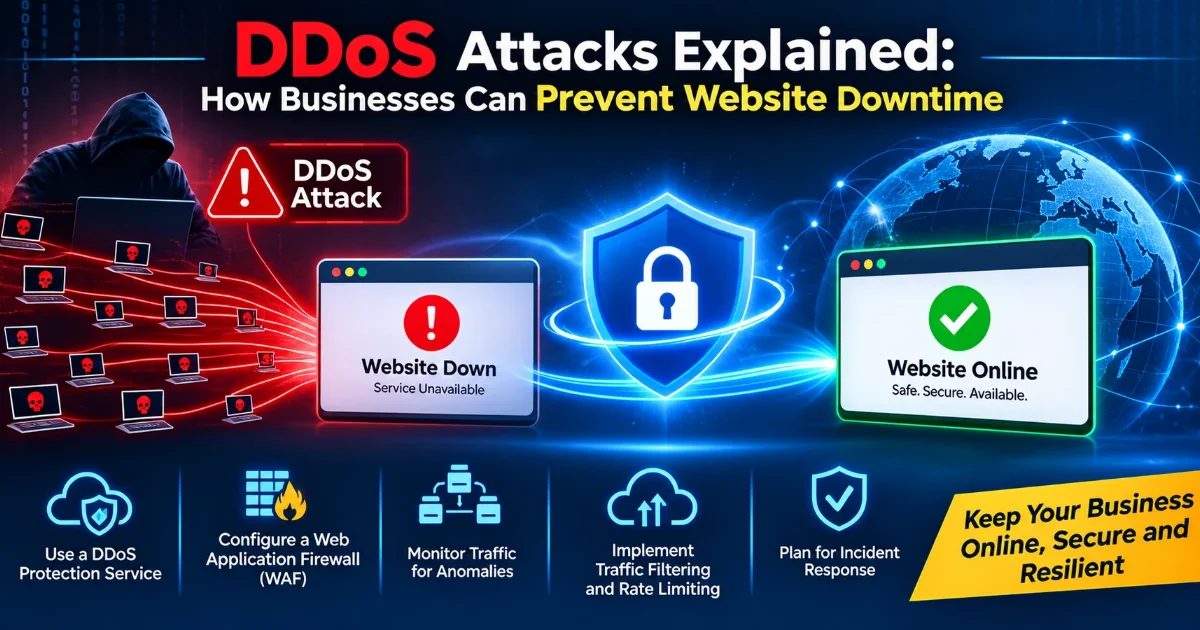
DDoS Attacks Explained: How Businesses Can Prevent Website Downtime
By: Ganesan D
13 Oct 2026
Category:
Cyber Security
Introduction
Websites and online applications are essential for modern business operations. However, a DDoS attack (Distributed Denial-of-Service attack) can overwhelm a website or server with excessive traffic, making services unavailable to legitimate users.
Understanding DDoS attacks in cybersecurity helps businesses prepare for service disruptions, protect online platforms, and maintain business continuity.
What Is a DDoS Attack?
A DDoS attack occurs when multiple compromised devices send excessive traffic or requests toward a targeted server, network, or application. This can exhaust available resources and prevent legitimate users from accessing the service.
Unlike a simple denial-of-service attack, a DDoS attack typically involves traffic from multiple sources, making it more difficult to block.
How Do DDoS Attacks Work?
Attackers commonly use networks of compromised devices, known as botnets, to generate large volumes of traffic or requests.
The attack may target network bandwidth, server resources, or application functionality. When the targeted infrastructure cannot handle the demand, website performance may deteriorate or the service may become unavailable.
Common Types of DDoS Attacks
DDoS attacks can target different layers of network and application infrastructure. The common types include:
-
Volumetric attacks:
Consume network bandwidth with excessive traffic.
-
Protocol attacks:
Exhaust resources in network infrastructure or connection-handling systems.
-
Application-layer attacks:
Overwhelm web applications with large numbers of seemingly legitimate requests.
Some incidents combine multiple attack types, requiring different mitigation techniques.
Signs of a DDoS Attack
Businesses should investigate the following warning signs to identify possible DDoS activity:
-
Unusually high traffic volumes
-
Unexpected website slowdowns
-
Frequent connection timeouts
-
Sudden increases in server resource usage
-
Unusual traffic patterns from multiple sources
-
Website or application outages
These symptoms can also result from legitimate traffic spikes or technical failures, so security teams should analyze traffic patterns before confirming an attack.
Impact of DDoS Attacks on Website Availability
A successful DDoS attack can affect business operations, customer experience, and the availability of online services. Common consequences include:
-
Website and application downtime
-
Lost sales and business opportunities
-
Disrupted customer services
-
Increased infrastructure costs
-
Damage to customer confidence
-
Operational and reputational challenges
For businesses that depend on online transactions, even a temporary outage can affect revenue and customer experience.
DDoS Attack Protection and Prevention
Organizations can reduce their exposure to DDoS attacks through layered security controls, proactive monitoring, and effective incident response planning.
Use DDoS Protection Services
Deploy specialized DDoS protection services, content delivery networks (CDNs), and web application firewalls (WAFs) where appropriate to filter malicious traffic and absorb excessive requests.
The right solution depends on the organization's infrastructure, application architecture, traffic patterns, and availability requirements.
Monitor Network Traffic
Use network monitoring and security analytics to identify unusual traffic patterns and respond quickly to potential attacks. Monitoring traffic volumes, connection rates, server performance, and application logs can help security teams investigate suspicious activity.
Configure Rate Limiting
Apply appropriate request limits to protect application endpoints from excessive request volumes while minimizing disruption to legitimate users. Rate limiting should be configured according to application requirements and expected traffic patterns.
Build Resilient Infrastructure
Use scalable infrastructure, load balancing, redundancy, and tested recovery procedures to improve service availability. Distributing workloads across suitable infrastructure can help reduce the impact of traffic surges and individual component failures.
Prepare an Incident Response Plan
Define escalation procedures, mitigation responsibilities, provider contacts, and communication processes before an attack occurs. A documented response plan helps teams coordinate mitigation activities and restore normal operations more efficiently.
Frequently Asked Questions
1. Can a DDoS Attack Steal Business Data?
A DDoS attack primarily targets service availability. However, it may occur alongside other cyberattacks, so organizations should monitor for additional suspicious activity.
2. Can Small Businesses Experience DDoS Attacks?
Yes. Businesses of any size with internet-facing websites, applications, or services may be targeted. Small businesses should evaluate their exposure and implement suitable protection measures.
3. Does a Firewall Alone Prevent DDoS Attacks?
Not necessarily. Traditional firewalls provide important protection, but large-scale attacks may require upstream traffic filtering and specialized DDoS mitigation services.
Conclusion
DDoS attacks can disrupt business operations by overwhelming websites, applications, and network infrastructure. Recognizing warning signs, deploying appropriate protection services, monitoring traffic, and preparing incident response procedures can help organizations reduce downtime.
A proactive DDoS attack protection strategy supports business continuity and helps maintain reliable online services.
Need Professional Cybersecurity Support?
Protecting your website and online services against DDoS attacks is essential for maintaining business continuity and customer trust. Agan Cyber Security LLC helps businesses strengthen their cybersecurity posture through security solutions tailored to their infrastructure and operational requirements.
Contact us today to discuss your cybersecurity requirements.