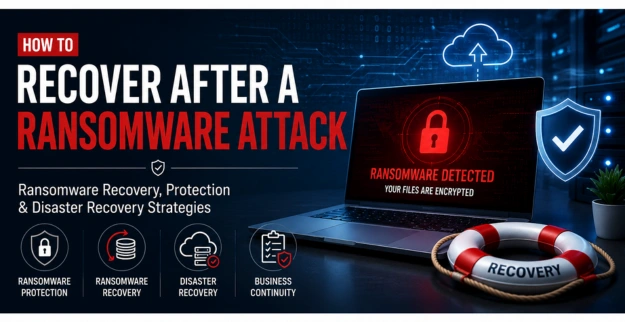
How to Recover After a Ransomware Attack
13 July 2026
Ransomware attacks are among the most disruptive cyber threats facing businesses today. A successful attack can encrypt critical business data, interrupt operations, and lead to significant financial and reputational losses. While prevention is essential, having a well-defined ransomware recovery plan is equally important to minimize downtime and restore operations quickly.
Organizations that combine strong ransomware protection, effective disaster recovery, and comprehensive business continuity planning are better equipped to recover from cyber incidents with minimal impact.
Immediate Actions
The first few hours after a ransomware attack are critical. Acting quickly can help contain the attack and reduce further damage.
1. Isolate Affected Systems
Immediately disconnect infected devices from the network to prevent ransomware from spreading to other systems.
2. Activate the Incident Response Plan
Notify your IT and cybersecurity teams, assign responsibilities, and begin following the organization's incident response procedures.
3. Identify the Scope of the Attack
Determine which devices, applications, servers, and business data have been affected to understand the overall impact.
4. Preserve Evidence
Collect system logs, screenshots, and other forensic evidence to support investigation and future remediation efforts.
Quick action significantly improves the chances of a successful ransomware recovery.
Recovery Process
Once the attack has been contained, organizations should begin recovering affected systems.
1. Remove the Malware
Ensure ransomware has been completely eliminated before reconnecting systems to the network.
2. Assess Business Impact
Identify critical business functions that must be restored first to minimize operational disruption.
3. Restore Essential Services
Recover priority applications, servers, and communication systems to resume normal business operations.
A structured disaster recovery process helps organizations recover safely and efficiently.
Restoring Data
Recovering business data should only be performed after systems have been verified as secure.
Best Practices
- Restore data from verified, clean backups
- Validate restored files before production use
- Verify application functionality
- Monitor systems for unusual activity after restoration
- Document recovery activities for future improvements
Regular backup testing ensures organizations can recover data when needed.
Preventing Future Attacks
Recovery should also include strengthening security to prevent similar incidents.
Recommended Security Measures
- Implement Multi-Factor Authentication (MFA)
- Keep operating systems and applications updated
- Deploy Endpoint Detection and Response (EDR)
- Conduct regular employee cybersecurity awareness training
- Perform vulnerability assessments and penetration testing
- Maintain secure offline and cloud backups
These measures improve ransomware protection and strengthen overall cyber resilience.
Conclusion
Recovering from a ransomware attack requires more than restoring encrypted files. Organizations need a structured ransomware recovery strategy that includes rapid incident response, reliable disaster recovery, secure data restoration, and long-term security improvements.
By investing in strong business continuity planning, regular backups, and proactive cybersecurity controls, businesses can reduce downtime, recover faster, and better protect themselves against future ransomware attacks.