IAM vs PAM: Understanding Enterprise Identity Security
By:
Ganesan D
31 Aug 2026
Category:
Network Security
Introduction
Modern businesses depend on digital identities to access applications, cloud platforms, databases, networks, and sensitive business information. As organizations grow, managing who can access what becomes increasingly important for preventing unauthorized access and reducing cyber risks.
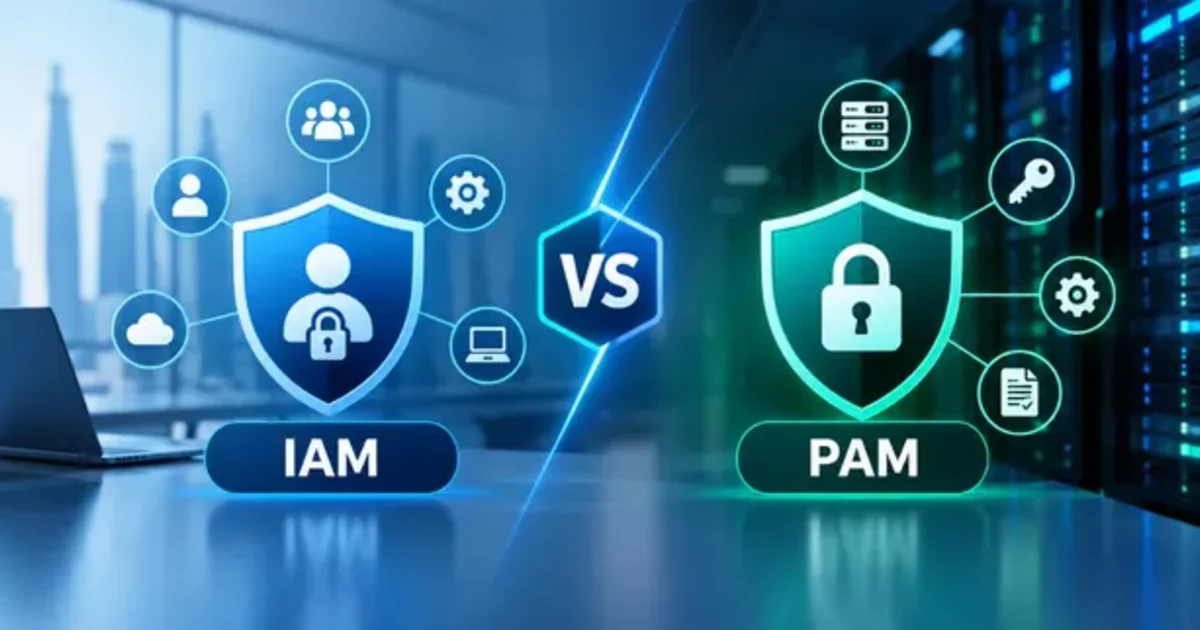
Identity Access Management (IAM) and Privileged Access Management (PAM) are two important components of Enterprise Identity Security. While IAM manages access for users and identities across business resources, PAM focuses specifically on protecting accounts with elevated or privileged permissions.
Understanding IAM vs PAM helps organizations build stronger access controls and protect critical systems from both external attacks and internal security risks.
IAM Overview
Identity Access Management (IAM) is a framework of policies, processes, and technologies used to manage digital identities and control access to business resources.
IAM helps organizations ensure that the right users have appropriate access to the right applications and information.
Key IAM Functions
- User identity creation and management
- Authentication and login management
- Role-based access control
- Multi-Factor Authentication (MFA)
- User provisioning and deprovisioning
- Access request and approval
- Single Sign-On (SSO)
- Regular access reviews
IAM is typically used across employees, contractors, customers, and other users who need access to organizational resources.
PAM Overview
Privileged Access Management (PAM) focuses on controlling and protecting accounts that have elevated permissions.
Privileged accounts can make significant changes to systems, applications, databases, networks, and security configurations. If these accounts are compromised, attackers may gain extensive control over an organization's environment.
Key PAM Functions
- Protect privileged accounts
- Control administrator access
- Manage privileged credentials
- Enforce just-in-time or temporary access
- Monitor privileged sessions
- Record privileged activities
- Rotate privileged passwords
- Apply least-privilege principles
PAM helps ensure that administrative access is granted only when necessary and under appropriate controls.
Comparison
| Feature |
IAM |
PAM |
| Primary Focus |
Managing identities and general access |
Protecting privileged access |
| Main Users |
Employees, contractors, customers, etc. |
Administrators and privileged users |
| Access Type |
Standard and role-based access |
Elevated or administrative access |
| Authentication |
Passwords, MFA, SSO, etc. |
Strong authentication and controlled privileged access |
| Main Goal |
Ensure appropriate access |
Prevent misuse or compromise of privileged accounts |
| Monitoring |
User access and identity activity |
Privileged sessions and administrative actions |
| Scope |
Broad organizational identity management |
Specialized privileged account security |
In simple terms, IAM manages who can access resources, while PAM focuses on protecting the accounts that have the highest level of access.
Business Use Cases
Employee Access Management
IAM can automatically provide employees with access to the applications required for their roles and remove access when they leave the organization.
Cloud Application Access
IAM helps businesses manage access to cloud platforms, SaaS applications, and other digital resources.
Administrator Account Protection
PAM protects administrator accounts by restricting privileged access, controlling credentials, and monitoring administrative activity.
Database Security
Privileged access controls can limit who can make changes to critical databases and monitor sensitive administrative actions.
Remote Access
IAM can enforce authentication and access policies for remote employees, while PAM can provide controlled access to privileged systems remotely.
Compliance
Both IAM and PAM can support security governance by providing access controls, activity monitoring, and audit records.
Conclusion
IAM vs PAM is not a matter of choosing one security solution over the other. IAM and PAM address different areas of Enterprise Identity Security and work best when implemented together.
Identity Access Management provides the foundation for managing user identities, authentication, and access across the organization. Privileged Access Management adds specialized protection for accounts with elevated permissions and helps reduce the risks associated with administrative access.
By combining IAM and PAM, businesses can apply stronger authentication, least-privilege access, continuous monitoring, and better control over critical systems and sensitive resources.