Secure Software Development Lifecycle (SDLC): Best Practices for 2026
24 Apr 2026
Category: Cyber Security
As software applications become more complex, integrating security into every stage of development is no longer optional—it’s essential. The secure SDLC approach ensures that security is built into the development process from the beginning, rather than being added later.
With rising cyber threats, adopting secure coding practices, continuous application security testing, and a DevSecOps mindset is critical for delivering secure and reliable software in 2026.
What is Secure SDLC
Secure SDLC (Secure Software Development Lifecycle) is a framework that incorporates security measures into each phase of software development.
Unlike traditional development models, it emphasizes proactive security by integrating application security testing and secure coding practices throughout the lifecycle.
By aligning with DevSecOps, organizations ensure that security is a shared responsibility across development, operations, and security teams.
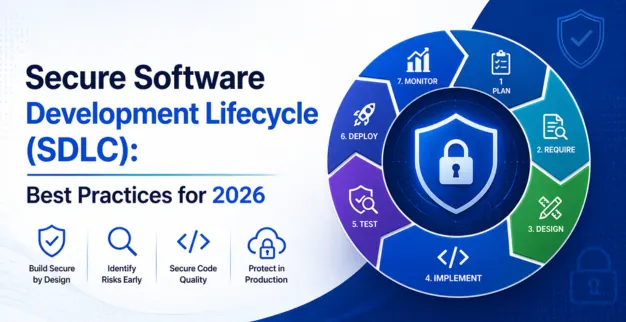
Stages of Secure SDLC
Implementing secure SDLC involves embedding security into every development stage:
1. Planning & Requirements
Define security requirements, compliance needs, and risk assessments early in the project.
2. Design
Create secure architecture and identify potential threats using threat modeling techniques.
3. Development
Follow secure coding practices to prevent vulnerabilities such as injection attacks and insecure configurations.
4. Testing
Perform continuous application security testing, including static and dynamic analysis, to detect vulnerabilities.
5. Deployment
Ensure secure configurations and validate systems before release.
6. Maintenance & Monitoring
Continuously monitor applications, apply patches, and update security controls.
These stages ensure a comprehensive and proactive approach to security.
Security Integration with DevSecOps
DevSecOps plays a key role in modern secure SDLC by embedding security into the DevOps pipeline.
Key aspects include:
- Automating application security testing in CI/CD pipelines
- Continuous monitoring and vulnerability management
- Collaboration between development, security, and operations teams
- Early detection and remediation of security issues
By adopting DevSecOps, organizations can deliver secure applications faster without compromising quality.
Benefits of Secure SDLC
Implementing secure SDLC offers several advantages:
- Early identification and mitigation of vulnerabilities
- Reduced cost of fixing security issues
- Improved software quality and reliability
- Stronger compliance with security standards
- Enhanced trust among users and stakeholders
Combining secure coding practices, application security testing, and DevSecOps ensures a robust security framework.
Conclusion
In 2026, integrating security into the development lifecycle is essential for building resilient applications. A well-implemented secure SDLC helps organizations prevent vulnerabilities, reduce risks, and deliver secure software efficiently.
By adopting modern practices like DevSecOps and continuous application security testing, businesses can stay ahead of evolving cyber threats.
FAQ
1. What is secure SDLC?
It is a development approach that integrates security into every stage of the software lifecycle.
2. Why is application security testing important?
It helps identify and fix vulnerabilities before deployment.
3. What are secure coding practices?
They are guidelines that developers follow to write secure and error-free code.
4. What is DevSecOps?
It is a practice that integrates security into the DevOps process.
5. What are the benefits of secure SDLC?
It improves security, reduces risks, and ensures high-quality software.