SOC as a Service vs In-House SOC: Which Is Right for Your Business?
07 July 2026
As cyber threats continue to evolve, businesses need continuous monitoring and rapid incident response to protect their IT environments. A Security Operations Center (SOC) plays a vital role in detecting, investigating, and responding to cyber threats before they impact business operations.
However, organizations often face an important decision: should they build an in-house SOC or choose SOC as a Service (SOCaaS)? Understanding the differences between a managed SOC and an internal SOC team helps businesses select the solution that best fits their security needs, budget, and resources.
What is SOC as a Service (SOCaaS)?
SOC as a Service (SOCaaS) is a fully managed cybersecurity service where an external security provider delivers 24/7 threat monitoring, threat detection, incident response, and security management.
Instead of building their own Security Operations Center, businesses rely on experienced cybersecurity professionals and advanced security technologies.
A managed SOC typically provides:
- 24/7 security monitoring
- Threat detection and analysis
- Incident response support
- Threat intelligence
- Compliance reporting
- Continuous security improvements
SOCaaS enables organizations to strengthen security without investing heavily in internal infrastructure.
What is an In-House SOC?
An in-house Security Operations Center is built and managed by the organization's internal cybersecurity team.
The company is responsible for hiring security analysts, deploying monitoring tools, managing infrastructure, and responding to security incidents.
An internal SOC typically includes:
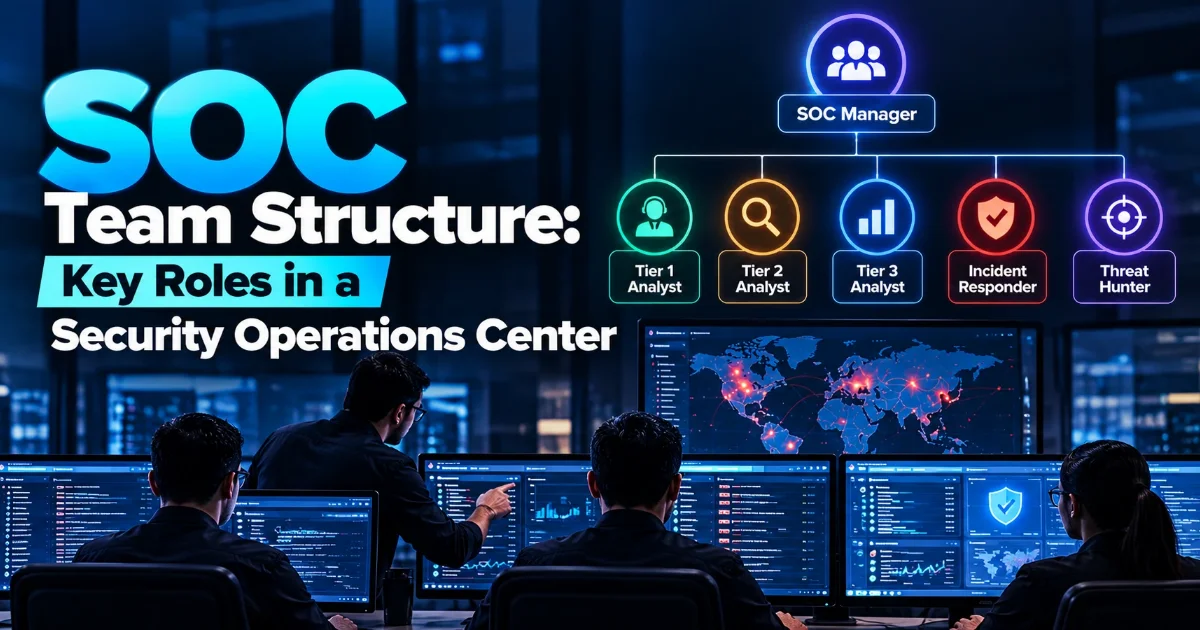
- Dedicated SOC analysts
- Security engineers
- Threat hunters
- Incident response specialists
- Security management platforms
This approach provides greater operational control but requires significant investment and ongoing maintenance.
SOC as a Service vs In-House SOC
Both models aim to improve cybersecurity, but they differ in several key areas.
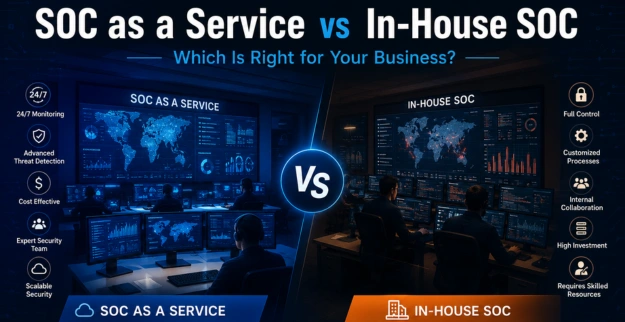
SOC as a Service
- Lower implementation cost
- Faster deployment
- 24/7 monitoring by experienced experts
- Access to advanced security technologies
- Scalable as business needs grow
In-House SOC
- Complete operational control
- Customized security processes
- Internal management of security operations
- Greater flexibility for large enterprises
- Requires dedicated staff and infrastructure
The right choice depends on an organization's size, budget, and cybersecurity maturity.
Pros & Cons
SOC as a Service
Pros
- Cost-effective for small and medium businesses
- Rapid implementation
- Continuous monitoring and support
- Access to cybersecurity expertise
Cons
- Less direct operational control
- Dependence on external service providers
In-House SOC
Pros
- Full control over security operations
- Customized workflows and policies
- Direct collaboration with internal teams
Cons
- High implementation and operating costs
- Skilled cybersecurity professionals required
- Continuous investment in tools and training
Which Is Right for Your Business?
SOC as a Service is ideal for organizations that want enterprise-grade cybersecurity without building an internal SOC. It offers expert monitoring, faster deployment, and lower operational costs.
An in-house SOC team is better suited for large enterprises with complex IT environments, dedicated cybersecurity staff, and the resources to manage a Security Operations Center internally.
Many organizations also adopt a hybrid approach by combining internal IT teams with a managed SOC provider to strengthen security while maintaining operational flexibility.
Conclusion
Choosing between SOC as a Service and an in-house Security Operations Center depends on your organization's business objectives, available resources, and cybersecurity requirements. While an internal SOC provides greater control, a managed SOC delivers expert monitoring, advanced threat detection, and cost-effective protection.
By selecting the right SOC model, businesses can improve threat visibility, strengthen incident response, and protect critical assets against evolving cyber threats.