Why a Security Operations Center Is Critical for Business Continuity
20 Jan 2025
Category: Security Operation
Nowadays, businesses are practically always online, and it barely takes a few minutes of shutdown to disentangle the losses of revenue, harm one's reputation and lose customer confidence. Cyber incidents like ransomware attacks, data breaches, and system outages are no longer elements of a scary future—they happen every day. Hence, a Security Operations Center (SOC) is now an indispensable element not only of a modern business security framework but also of a long-term continuity strategy.
Cyber Incidents and Business Disruption
Cyberattacks don't merely target IT systems; they cause the breakdown of the whole business process. One security incident might halt the production line, stop clients from being able to use services, leak confidential information, and expose the company to legal risks. For quite a number of businesses, especially smaller and medium ones, it is very costly and lengthy to get back to normal after such disturbances.
Without continuous monitoring and reaction, threats may stay hidden until they cause irreparable harm.
Role of SOC in Minimizing Downtime
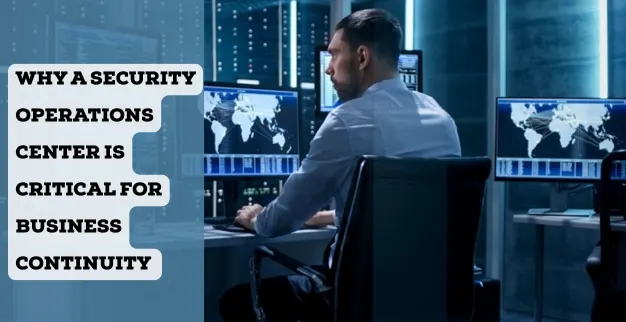
That's exactly the sort of situation a security operations center would be set up to prevent. In fact, they identify threats early and act fast to contain them by being available and monitoring the systems 24/7.
SOC services basically aim at getting the system back up and running as soon as possible by spotting suspicious activity, disconnecting the affected machines, and quickly coordinating the fixing of the problems at hand.
Rather than businesses just reacting to the system failure, they can continue their work while the threats are being cleared out without their knowledge.
Early Threat Detection and Response
One of the biggest advantages of SOC services is SOC monitoring. Using advanced tools, threat intelligence, and skilled analysts, a SOC continuously analyzes logs, network traffic, and system behavior.
Early detection allows businesses to stop attacks before they escalate—whether it’s malware, phishing attempts, insider threats, or unauthorized access. Faster response means less damage, fewer disruptions, and quicker recovery.
Protecting Critical Systems and Data
Every business relies on critical systems such as ERP platforms, customer databases, financial applications, and cloud services. A SOC plays a key role in protecting these assets by continuously watching for abnormal behavior and security breaches.
By monitoring endpoints, networks, and cloud environments, a SOC helps safeguard sensitive data and ensures systems remain available and reliable. This protection is essential for maintaining trust with customers and partners.
Supporting Compliance and Audits
Many industries are required to meet strict security and compliance standards. A security operations center supports compliance by maintaining detailed logs, incident reports, and audit trails.
SOC services help organizations demonstrate due diligence during audits and regulatory reviews. This reduces compliance risks and ensures businesses stay aligned with industry and legal requirements.
Long-Term Business Resilience
Beyond immediate threat response, a SOC strengthens long-term resilience. By analyzing trends, learning from incidents, and continuously improving defenses, businesses become better prepared for future attacks.
A proactive SOC approach transforms cybersecurity from a reactive task into a strategic advantage—supporting stability, growth, and confidence in digital operations.
Secure Your Business Operations
Business continuity depends on visibility, speed, and preparedness. A Security Operations Center provides all three.
At Agan Cybersecurity LLC, our SOC services are designed to protect your systems, minimize disruptions, and keep your business running—no matter what threats arise.
Secure your business operations today with proactive SOC protection.