Software Bill of Materials (SBOM): Understanding Hidden Software Risks
By: Ganesan D
28 Oct 2026
Category:
Cyber Security
Introduction
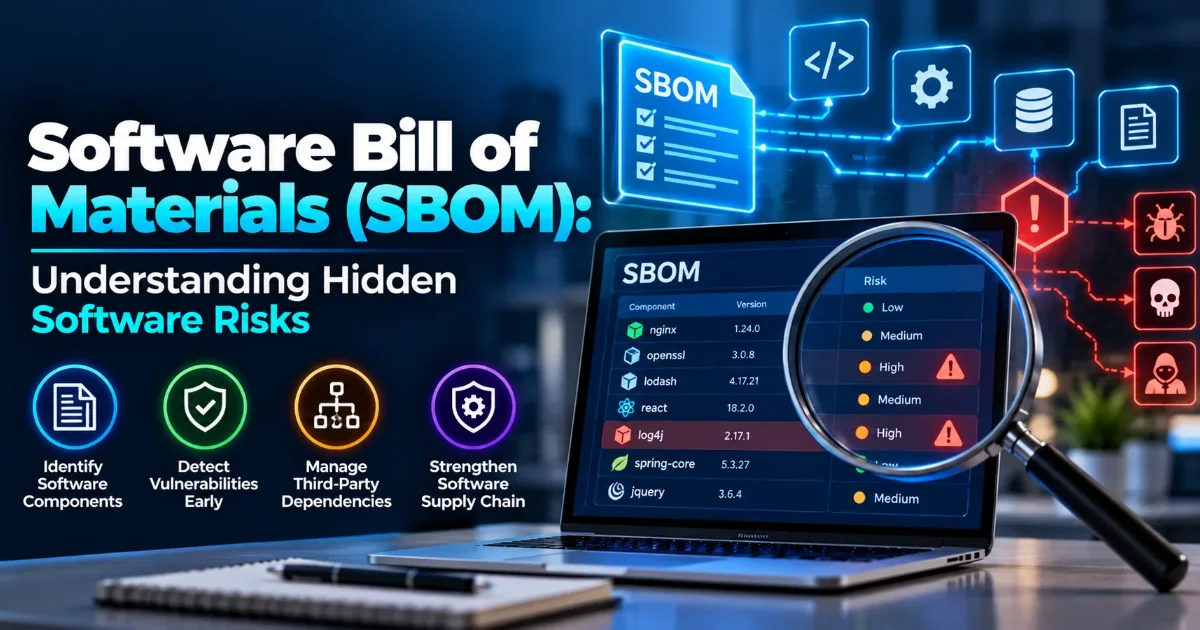
Modern business applications rely on multiple software components, including open-source libraries, third-party packages, and commercial dependencies. These components can introduce vulnerabilities that are difficult to identify without proper visibility. A Software Bill of Materials (SBOM) helps organisations understand what their software contains and manage associated security risks.
What Is a Software Bill of Materials (SBOM)?
An SBOM is a structured inventory of software components and dependencies used in an application or product. Similar to an ingredients list, it helps developers and security teams identify the software building blocks within their systems.
For businesses exploring a Software Bill of Materials in the UAE, SBOMs can support vulnerability management, compliance activities, and software supply chain security.
Key Components and Information in an SBOM
An SBOM may include the following information:
-
Component Names:
Names of libraries, packages, and software modules.
-
Versions:
Specific releases used in an application.
-
Supplier Information:
Details about the component's provider or publisher.
-
Identifiers:
Unique references, such as package URLs or other component identifiers.
-
Dependencies:
Relationships between software components.
-
Licensing Information:
Details that help organisations review applicable software licences.
-
Integrity Information:
Hashes or other references that help verify component identity, where supported.
The completeness and accuracy of an SBOM depend on how it is generated and maintained.
Hidden Software Risks
Without a reliable software inventory, businesses may struggle to identify outdated dependencies, unsupported libraries, malicious packages, and vulnerable components inherited through third-party software.
An SBOM helps security teams understand where components are used and prioritise remediation when new vulnerabilities are disclosed. However, an SBOM does not automatically prove that software is secure or that every component has been identified.
Open-Source Vulnerabilities and Supply Chain Security
Open-source software supports rapid development, but vulnerabilities in a single widely used library can affect many applications. Attackers may also target software repositories, compromise package maintainers, or introduce malicious dependencies.
A current SBOM helps organisations identify potentially affected components and investigate whether remediation is required. Businesses should combine SBOM analysis with vulnerability scanning, dependency updates, and supplier risk assessments.
SBOM Formats: SPDX and CycloneDX
Two widely used SBOM formats are:
-
SPDX:
An ISO-standardised format for communicating software component and licensing information.
-
CycloneDX:
A standard designed for software supply chain and component analysis, including security-related use cases.
Both formats support structured software inventory information. The appropriate format depends on organisational requirements, existing tools, and customer or regulatory expectations.
SBOM Creation and Management
An SBOM can be generated through software composition analysis tools, build pipelines, package managers, and development workflows. A signed SBOM can help recipients verify the document's origin and detect unauthorised changes when signature verification is correctly implemented.
Organisations evaluating an SBOM software inventory tool or solutions such as CertiNext SBOM management by eMudhra should verify supported formats, integrations, signing and verification capabilities, update workflows, and reporting features before choosing a platform.
SBOM Best Practices for UAE Businesses
Businesses can strengthen software supply chain security by following these best practices:
-
Generate SBOMs During Development:
Create software inventories during development and release processes.
-
Keep Inventories Updated:
Update SBOMs whenever software components and dependencies change.
-
Scan for Vulnerabilities:
Check software components against reliable vulnerability databases.
-
Prioritise Security Risks:
Assess vulnerabilities based on exploitability and potential business impact.
-
Verify Signed SBOMs:
Validate signatures where supported and protect signing keys.
-
Assess Suppliers:
Include SBOM requirements in supplier assessments and software procurement processes.
Frequently Asked Questions
1. Is an SBOM a Vulnerability Scanner?
No. An SBOM lists software components; security tools analyse that inventory to identify known vulnerabilities and other risks.
2. Do Small Businesses Need SBOMs?
SBOMs can benefit any organisation developing, purchasing, or maintaining software, especially when third-party dependencies are involved.
3. Does a Signed SBOM Guarantee Software Security?
No. Signing helps verify authenticity and integrity, but it does not guarantee that the inventory is complete or that the software is vulnerability-free.
Conclusion
A Software Bill of Materials gives businesses greater visibility into software dependencies and helps them respond more effectively to supply chain risks. Accurate inventories, continuous vulnerability assessment, and secure development practices can strengthen software security.
Strengthen Your Software Supply Chain Security with Agan Cyber Security LLC
Protecting software from supply chain risks requires visibility into dependencies, timely vulnerability assessments, and effective security controls. Agan Cyber Security LLC helps businesses assess cybersecurity risks, improve security monitoring, and protect their digital environments.
Explore our cybersecurity services to identify vulnerabilities, strengthen software security, and protect your business systems in Dubai and across the UAE.
Contact us today to discuss your cybersecurity requirements.