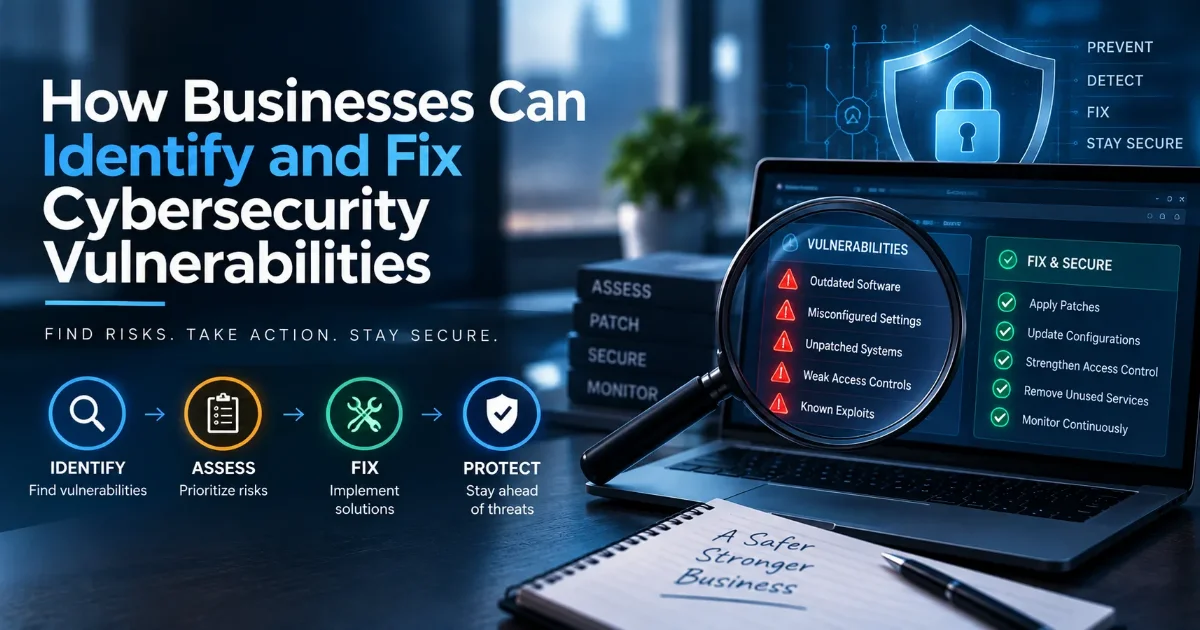
Top Cybersecurity Gaps in 2025 — and How Your Business Can Close Them
05 Dec 2025
Category: Cyber Security
Cyber threats in 2025 are evolving faster than traditional security can keep up. AI-driven attacks, cloud misconfigurations, supply-chain vulnerabilities, and weak identity controls are putting businesses at higher risk than ever. Understanding these gaps and addressing them proactively is critical for protecting your organization.
This guide highlights the most critical cybersecurity gaps and provides actionable strategies to help your business close them effectively.
1. Lack of Real-Time Threat Detection
Many companies still rely on legacy security tools that detect only known malware or static threats. In 2025, attackers use AI, automation, and multi-stage intrusions that bypass traditional systems.
How to Close the Gap
- Deploy SIEM or XDR solutions for real-time analytics
- Enable behavioral monitoring for anomalies
- Integrate threat intelligence feeds
- Use 24/7 SOC monitoring to detect after-hours attacks
Modern threats require modern detection solutions.
2. Weak Identity & Access Management (IAM)
With remote work and cloud adoption at an all-time high, compromised accounts have become the leading attack vector for data breaches in 2025.
How to Close the Gap
- Implement MFA across all accounts
- Enforce Zero Trust identity verification
- Use PAM (Privileged Access Management) for admin accounts
- Conduct periodic access reviews
Strong identity controls prevent most unauthorized access attempts.
3. Cloud Misconfigurations
Open storage buckets, weak API controls, and unmanaged cloud resources create significant vulnerabilities as organizations move to SaaS, IaaS, and hybrid environments.
How to Close the Gap
- Use Cloud Security Posture Management (CSPM) tools
- Set correct IAM roles, encryption, and access policies
- Continuously scan cloud workloads for misconfigurations
- Train IT teams on cloud security best practices
Cloud security must be proactive—not reactive.
4. Outdated Vulnerability Management
Manual, infrequent scans leave organizations exposed to zero-days and known CVEs that attackers exploit quickly.
How to Close the Gap
- Implement continuous vulnerability scanning
- Prioritize remediation based on risk
- Patch critical vulnerabilities immediately
- Use automated remediation wherever possible
A modern vulnerability management program is essential in 2025.
5. Insufficient Endpoint Security
Traditional antivirus solutions are no longer sufficient for laptops, mobile devices, and remote endpoints.
How to Close the Gap
- Deploy EDR (Endpoint Detection & Response)
- Enable device encryption and secure configurations
- Use DLP to prevent data leakage from endpoints
- Enforce strong device access controls
Endpoints are the new perimeter and must be secured.
6. No Incident Response (IR) Plan
Without a documented IR plan, breaches cause longer downtime and greater damage.
How to Close the Gap
- Build a documented IR plan
- Conduct regular tabletop exercises
- Maintain offline backups
- Train employees on breach escalation procedures
Proper IR planning reduces downtime during real attacks.
Conclusion
The top cybersecurity gaps in 2025—from weak identity controls to cloud misconfigurations—leave businesses exposed to ransomware, data breaches, and compliance risks. Closing these gaps requires the right tools, trained teams, and proactive security strategies.
At Agan Cybersecurity, we help businesses strengthen their security posture with advanced SOC services, modern SIEM platforms, cloud security solutions, vulnerability management, and expert advisory support.