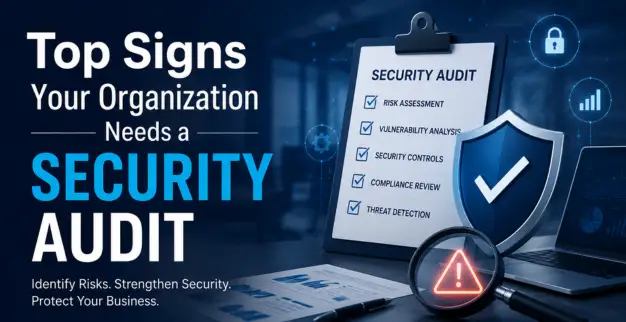
Top Signs Your Organization Needs a Security Audit
19 June 2026
As cyber threats continue to evolve, businesses must regularly evaluate their security posture to identify vulnerabilities before attackers do. Many organizations assume their existing security controls are sufficient until they experience a data breach, compliance issue, or operational disruption.
A security audit helps organizations assess their cybersecurity defenses, identify weaknesses, and ensure compliance with industry regulations. Combined with a comprehensive risk assessment, regular audits help businesses proactively address security gaps and strengthen overall protection.
What is a Security Audit?
A security audit is a systematic review of an organization's IT infrastructure, policies, processes, and security controls.
The purpose of a security audit is to:
- Identify vulnerabilities and security gaps
- Evaluate security policies and procedures
- Assess regulatory and security compliance requirements
- Verify the effectiveness of existing controls
- Improve overall cybersecurity resilience
Regular audits provide valuable insights into potential risks before they become serious security incidents.
Warning Signs Your Organization Needs a Security Audit
Several indicators suggest it may be time to perform a security audit.
1. Frequent Security Incidents
Repeated malware infections, phishing attacks, or unauthorized access attempts may indicate underlying vulnerabilities.
2. Outdated Systems and Software
Legacy systems and unpatched applications often create exploitable security gaps.
3. Lack of Security Visibility
Organizations that lack monitoring and reporting capabilities may be unaware of active threats.
4. Rapid Business Growth
Expanding networks, cloud environments, and remote workforces can introduce new risks that require evaluation.
5. Compliance Requirements
Businesses subject to industry regulations must regularly demonstrate security compliance and maintain audit readiness.
Ignoring these warning signs can increase the likelihood of security incidents.
Business Risks of Avoiding Security Audits
Failing to conduct regular audits can expose organizations to significant risks.
Operational Risks
- System downtime and service disruptions
- Reduced employee productivity
- Business continuity challenges
Security Risks
- Data breaches and unauthorized access
- Malware and ransomware infections
- Insider threats
Compliance Risks
- Regulatory penalties
- Failed compliance assessments
- Loss of customer trust
A thorough risk assessment helps identify and prioritize these threats before they impact operations.
Benefits of Regular Audits
Conducting regular security audits provides multiple business advantages.
- Improved threat detection and prevention
- Stronger regulatory compliance
- Better visibility into security risks
- Enhanced incident response preparedness
- Reduced likelihood of costly security breaches
Organizations that audit regularly are better prepared to address evolving cybersecurity challenges.
Audit Process
A typical security audit follows several key steps.
1. Planning and Scope Definition
Identify systems, applications, and processes to be evaluated.
2. Risk Assessment
Analyze potential threats, vulnerabilities, and business impacts.
3. Security Review
Evaluate policies, access controls, configurations, and monitoring capabilities.
4. Findings and Recommendations
Document security gaps and provide remediation guidance.
5. Remediation and Follow-Up
Implement improvements and verify corrective actions.
This structured process helps organizations continuously strengthen their security posture.
Conclusion
A security audit is one of the most effective ways to identify vulnerabilities, improve security compliance, and reduce cyber risks. Whether facing rapid growth, evolving threats, or regulatory requirements, businesses should proactively assess their security controls through regular audits and risk assessments.
Organizations that prioritize security audits gain stronger protection, improved compliance, and greater confidence in their cybersecurity readiness.