Why Endpoint Security Is Critical in Modern Workplaces
18 June 2026
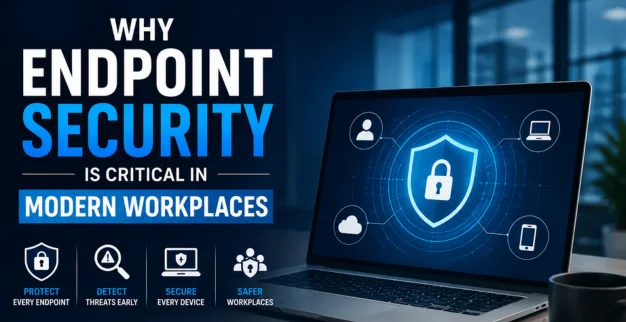
Modern workplaces have evolved significantly with the rise of remote work, cloud computing, and mobile devices. Employees now access business applications and data from laptops, smartphones, tablets, and other connected devices. While this flexibility improves productivity, it also increases cybersecurity risks.
Each connected device acts as an endpoint and can become a potential entry point for cybercriminals. Without effective endpoint security and endpoint protection, organizations risk data breaches, ransomware attacks, and operational disruptions. As cyber threats continue to evolve, businesses increasingly rely on advanced cyber security services and threat detection solutions to protect their digital environments.
What is Endpoint Security?
Endpoint security refers to the process of protecting endpoint devices such as laptops, desktops, servers, smartphones, and tablets from cyber threats.
Unlike traditional antivirus software, modern endpoint security provides continuous monitoring, threat analysis, and incident response capabilities.
Key components of endpoint security include:
- Antivirus and anti-malware protection
- Endpoint Detection and Response (EDR)
- Device management and monitoring
- Access control and authentication
- Data encryption and security policies
A robust endpoint security strategy helps organizations secure devices regardless of where employees work.
Why Endpoints Are Targeted
Cybercriminals often target endpoints because they are one of the easiest ways to gain access to corporate networks.
Common reasons include:
- Increased remote and hybrid work environments
- Employees using personal devices for work
- Access to sensitive business data
- Weak passwords and poor security practices
- Unpatched software vulnerabilities
A compromised endpoint can provide attackers with access to critical systems and confidential information.
Common Endpoint Threats
Modern workplaces face a variety of endpoint-related threats.
Malware and Ransomware
Malicious software can encrypt files, steal information, and disrupt business operations.
Phishing Attacks
Employees may unknowingly click malicious links or download infected attachments.
Insider Threats
Unauthorized access or accidental actions by employees can expose sensitive data.
Zero-Day Exploits
Attackers exploit software vulnerabilities before patches become available.
Early threat detection is essential for minimizing the impact of these attacks.
Security Best Practices
Organizations can improve endpoint protection by implementing strong security measures.
- Enable multi-factor authentication (MFA)
- Keep software and operating systems updated
- Deploy Endpoint Detection and Response (EDR) solutions
- Conduct employee cybersecurity awareness training
- Encrypt sensitive data and devices
- Monitor endpoints continuously for suspicious activities
These practices significantly reduce cybersecurity risks and strengthen workplace security.
Business Benefits
Investing in endpoint security offers several advantages.
- Reduced risk of data breaches
- Faster threat detection and response
- Improved compliance with regulations
- Enhanced workforce productivity
- Better business continuity and resilience
Professional cyber security services help organizations maintain strong endpoint security across their IT environments.
Conclusion
As workplaces become increasingly digital and distributed, endpoint devices remain one of the most targeted areas for cyberattacks. Without proper endpoint security and endpoint protection, organizations face growing risks from malware, phishing, and unauthorized access.
By implementing advanced threat detection capabilities and leveraging expert cyber security services, businesses can strengthen security, protect sensitive data, and maintain operational continuity in the modern workplace.