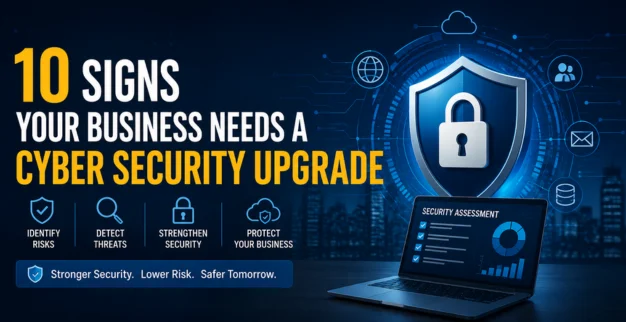
10 Signs Your Business Needs a Cyber Security Upgrade
29 June 2026
As cyber threats continue to evolve, businesses can no longer rely on outdated security tools and reactive protection methods. Cybercriminals are using advanced techniques to target organizations of all sizes, making strong business cyber security more important than ever.
If your security infrastructure has not been reviewed recently, it may be time for a cyber security upgrade. Regular security assessments and professional cyber security services help businesses identify weaknesses before they become costly security incidents.
Why Security Upgrades Matter
Technology changes rapidly, and so do cyber threats. Security solutions that were effective a few years ago may no longer provide adequate protection against ransomware, phishing attacks, insider threats, and cloud-based attacks.
A modern cybersecurity strategy helps organizations:
- Protect sensitive business data
- Reduce cyber risks
- Maintain regulatory compliance
- Improve business continuity
- Strengthen customer trust
Keeping your security infrastructure updated is essential for long-term business resilience.
10 Warning Signs Your Business Needs a Cyber Security Upgrade
1. Frequent Malware or Phishing Incidents
Repeated malware infections or phishing attacks indicate that your current defenses may no longer be effective.
2. Outdated Security Software
Using legacy antivirus solutions or unsupported security tools leaves your business vulnerable to modern threats.
3. Increasing System Downtime
Frequent outages caused by cyber incidents or security failures can significantly affect productivity and operations.
4. No Regular Security Assessment
Without a periodic security assessment, hidden vulnerabilities can remain undetected for long periods.
5. Weak Password and Access Controls
Employees using weak passwords or shared accounts increase the risk of unauthorized access.
6. Lack of Multi-Factor Authentication (MFA)
If critical business systems are not protected with MFA, attackers can more easily compromise user accounts.
7. Limited Security Monitoring
Without continuous monitoring, suspicious activities may go unnoticed until significant damage has occurred.
8. Growing Remote Workforce
Remote and hybrid work environments require stronger endpoint protection and secure remote access controls.
9. Compliance Challenges
Difficulty meeting regulatory requirements often indicates outdated security policies and controls.
10. No Incident Response Plan
If your organization is unprepared to respond to a cyberattack, recovery can become slow, expensive, and disruptive.
Risks of Outdated Security
Ignoring the need for a cyber security upgrade can expose businesses to serious risks.
- Data breaches and information theft
- Ransomware attacks
- Financial losses
- Regulatory penalties
- Business downtime
- Loss of customer trust and reputation
The cost of recovering from an attack is often much higher than investing in preventive security measures.
Upgrade Recommendations
Organizations should strengthen business cyber security by implementing modern security practices.
- Conduct regular security assessments
- Upgrade endpoint protection solutions
- Enable Multi-Factor Authentication
- Deploy continuous threat monitoring
- Perform regular vulnerability assessments
- Partner with experienced cyber security services providers
These improvements help businesses stay protected against evolving cyber threats.
Conclusion
Cyber threats are constantly changing, and businesses must adapt their security strategies accordingly. Recognizing these warning signs early allows organizations to take proactive action before a security incident occurs.
By investing in a cyber security upgrade, conducting regular security assessments, and leveraging professional cyber security services, businesses can strengthen their defenses, reduce risks, and ensure long-term operational resilience.