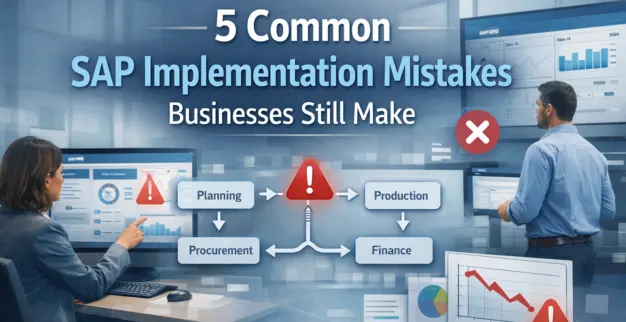
5 Common SAP Implementation Mistakes Businesses Still Make
29 Dec 2025
Category: SAP ERP
Introduction
Implementing SAP ERP can transform your business, but many organizations stumble due to avoidable mistakes. Understanding these common pitfalls can save time, reduce costs, and ensure a smoother rollout. In this article, we explore the five most frequent SAP implementation errors and offer practical advice to help businesses achieve a successful ERP deployment.
1. Inadequate Planning and Goal Setting
One of the biggest mistakes is jumping into SAP implementation without clear objectives. Businesses often underestimate the importance of defining goals, scope, and key success metrics. Without a solid plan, projects risk delays, budget overruns, and misaligned expectations. Take the time to map out processes, assign responsibilities, and set realistic timelines.
2. Ignoring Change Management
SAP implementation affects employees across departments, yet many organizations neglect proper change management. Failing to communicate changes, train staff, and address resistance can lead to low adoption rates and frustration. Engaging users early, offering continuous training, and providing support are critical for successful adoption.
3. Overcomplicating the System
Customizing SAP excessively or adding unnecessary modules can complicate the system and slow down operations. Businesses should focus on core processes first and implement only the features that deliver real value. A lean, well-structured SAP setup is easier to manage and scales better over time.
4. Poor Data Management
Clean, accurate data is essential for SAP to work effectively. Many implementations fail because of inconsistent, incomplete, or outdated data. Data migration should be carefully planned, with thorough validation and cleansing, to ensure that the new system operates smoothly from day one.
5. Neglecting Post-Implementation Support
Deployment is just the beginning. Without ongoing support, monitoring, and optimization, SAP systems can quickly become inefficient. Establish a post-implementation support plan, monitor performance, and make iterative improvements to ensure long-term success and ROI.
Conclusion
Avoiding these common SAP implementation mistakes can significantly increase the chances of a successful ERP rollout. Proper planning, effective change management, minimal customization, accurate data, and continuous support are key to maximizing SAP benefits.
At Agan Cyber Security, we guide businesses through SAP implementation, helping them avoid pitfalls and achieve a smooth, efficient ERP experience.