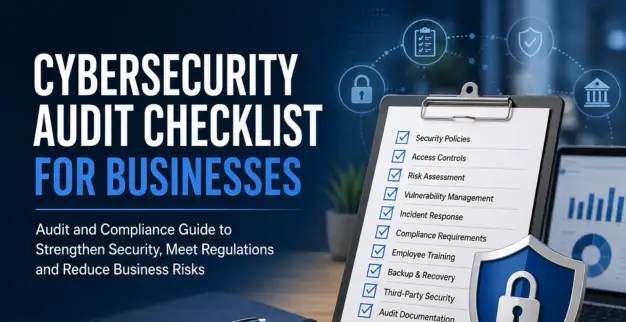
Cybersecurity Audit Checklist for Businesses
18 May 2026
In today’s regulatory and threat-driven environment, businesses must ensure strong security practices and adherence to cybersecurity laws and regulations. A structured cybersecurity audit checklist helps organizations evaluate their security posture, meet audit and compliance requirements, and reduce risks.
Without proper audits, businesses may face security breaches, penalties, and operational disruptions.
What is a Cybersecurity Audit
What is a cybersecurity audit? It is a systematic evaluation of an organization’s security controls, policies, and procedures to ensure they meet required standards.
- ✔ Identifies vulnerabilities and risks
- ✔ Ensures adherence to audit and compliance requirements
- ✔ Evaluates effectiveness of security controls
- ✔ Verifies alignment with cybersecurity laws and regulations
A cybersecurity audit provides a clear understanding of security strengths and weaknesses.
Key Audit Areas
Focusing on the right key audit areas ensures comprehensive evaluation.
- ✔ Network security and firewall configurations
- ✔ Access control and identity management
- ✔ Data protection and encryption practices
- ✔ Endpoint and device security
- ✔ Incident response and monitoring systems
- ✔ Compliance with cybersecurity laws and regulations
Checklist for Businesses
A practical cybersecurity audit checklist helps organizations streamline the audit process, identify security gaps, and improve overall compliance readiness. Following a structured checklist ensures businesses remain aligned with security best practices and regulatory requirements.
1. Review and Update Security Policies
Ensure all cybersecurity policies, procedures, and guidelines are current, properly documented, and aligned with business operations and compliance requirements. Policies should be reviewed regularly to address evolving threats and regulatory changes.
2. Ensure Strong Password and Access Controls
Implement strong password policies, multi-factor authentication (MFA), and role-based access controls to prevent unauthorized access to systems and sensitive information. Regularly review user accounts and permissions to remove unnecessary access.
3. Verify System Patching and Updates
Ensure operating systems, applications, firewalls, and security tools are regularly updated with the latest patches and security fixes. Unpatched systems are one of the most common causes of security breaches.
4. Maintain Logs and Monitoring Systems
Enable centralized logging and continuous monitoring to track suspicious activities, detect threats early, and support incident investigations. Proper log management also helps meet audit and compliance requirements.
5. Conduct Vulnerability Assessments
Perform regular vulnerability scans and security assessments to identify weaknesses in networks, applications, and infrastructure. Address identified vulnerabilities promptly to reduce security risks.
6. Ensure Compliance with Audit and Compliance Standards
Verify that systems, policies, and operational practices align with applicable compliance standards and cybersecurity regulations such as ISO 27001, GDPR, HIPAA, PCI DSS, or NIST requirements.
7. Train Employees on Cybersecurity Awareness
Conduct regular cybersecurity awareness and phishing simulation training programs to educate employees about security risks, safe practices, and incident reporting procedures. Human awareness is critical to reducing cyber threats.
8. Review Backup and Disaster Recovery Processes
Ensure backup systems are functioning correctly and disaster recovery plans are tested regularly. Organizations should be prepared to recover quickly from ransomware attacks, system failures, or data loss incidents.
9. Assess Incident Response Readiness
Review incident response plans, escalation procedures, and communication strategies to ensure teams can respond effectively during cybersecurity incidents or compliance breaches.
10. Evaluate Third-Party and Vendor Security
Assess the cybersecurity practices of vendors, suppliers, and third-party service providers to minimize supply chain and external security risks.
Preparation Tips
Following effective preparation tips ensure successful audits.
- ✔ Conduct internal audits regularly
- ✔ Keep documentation updated and accessible
- ✔ Fix known vulnerabilities in advance
- ✔ Align policies with compliance standards
- ✔ Train teams on audit requirements
- ✔ Use automated tools for monitoring and reporting
Real-Time Issues Faced by Businesses
- • Failure to meet audit and compliance requirements
- • Limited visibility into security controls
- • Delayed detection of vulnerabilities
- • Lack of awareness of cybersecurity laws and regulations
- • Ineffective audit preparation processes
Example:
A business failed an audit due to poor documentation and weak controls. By implementing a structured cybersecurity audit checklist, the organization improved compliance, reduced risks, and successfully passed future audits.
Conclusion:
A well-defined cybersecurity audit checklist is essential for ensuring effective audit and compliance. By focusing on key audit areas, addressing common gaps, and following preparation tips, businesses can strengthen their security posture and meet regulatory requirements.