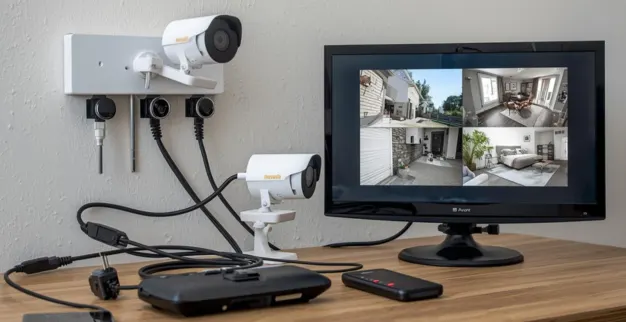
DIY Security: How to Set Up Your Own Home Surveillance System
By: Ganesan D
20 Sep 2025
Category: DIY Security
Having a home surveillance system gives you peace of mind, helps deter intruders, and ensures your property is better protected. The good news: with the right planning and tools, you can do it yourself—no expensive contractors needed. Here are steps, tips, and best practices like in a maintenance guide, but for setting up a system from scratch.
Why DIY Surveillance?
Doing it yourself can:
- Lower your costs vs hiring installers.
- Give you control over where cameras are placed, what features are used, and how footage is stored.
- Allow you to expand or adjust as needed.
But to get real benefit, you need proper planning, correct installation, and regular upkeep—just like maintenance of an existing system.
What You’ll Need Before You Start
- A schematic or map of your house (walls, doors, windows, driveways).
- Cameras (wired, wireless, or IP) with specs you need: resolution, night-vision, outdoor rating (IP rating if outdoors).
- Recording device: DVR or NVR, or cameras that support SD card / local storage / cloud storage.
- Power supply or battery / solar setup.
Step-by-Step Installation Guide
Survey & plan
- Walk around your home: note doors, windows, drive-ins, backyard, other vulnerable zones.
- Identify high-traffic interior areas (hallways, main entry, stairs).
- Sketch camera positions ensuring overlapping fields of view to avoid blind spots.
- Determine power sources and network routes.
Choose your equipment
- Decide wired vs wireless. Wired / PoE gives reliability; wireless gives flexibility.
- Pick camera types: bullet, dome, PTZ, fixed lens, varifocal.
- Decide on resolution (1080p, 4K), view angle, and night/low light performance.
- Select storage: local (NVR/DVR/HDD), SD card, cloud, or hybrid.
- Check weatherproofing (IP65, IP66) and tamper resistance.
Mounting & wiring
- Install mounts at 8–10 feet (2.5–3 m) to prevent tampering but capture clear detail.
- Run wiring neatly using conduits or clips; separate power and data cables.
- For wireless: place where WiFi is strong, add extenders/mesh if needed.
Connect & configure
- Connect cameras to recording/network (Ethernet/PoE for IP, DVR for analog).
- Configure settings: resolution, frame rate, night vision, white balance.
- Set motion detection zones to reduce false alarms.
- Choose schedule: 24/7 or motion-triggered.
Testing
- Check live feeds day and night for clarity.
- Walk entry points to spot blind areas.
- Test remote access from phone or another network.
Securing & Protecting the System
- Change default passwords on cameras and accounts.
- Keep firmware and software updated.
- Protect cables and mounts with housings outdoors.
Maintenance & Long-Term Care
- Clean camera lenses regularly.
- Check mounts to ensure cameras haven’t shifted.
- Inspect cables and connectors for damage.
Common Mistakes & How to Avoid Them
- Placing cameras too low or too high.
- Ignoring WiFi/network strength.
- Not accounting for weather and environment.
Summary
A high-quality DIY home surveillance system is possible with good planning, the right equipment, and careful installation. Best results come when you:
- Map risks and plan coverage ahead.
- Choose durable, high-quality equipment.
- Place cameras optimally.
- Secure hardware and software.
- Maintain the system regularly.