How Multi-Factor Authentication Strengthens Business Security

Multi-Factor Authentication strengthens business security

By: Ganesan D 24 Sep 2026 Category: Cyber Security

Introduction

Businesses increasingly rely on cloud applications, remote access, SaaS platforms, email services, and digital systems to support their daily operations. As more business resources become accessible online, protecting user accounts has become an important part of cybersecurity.

Passwords have traditionally been the primary method of authentication, but password-based security can be weakened by phishing, credential theft, password reuse, and other attacks.

Multi-Factor Authentication (MFA) adds an additional layer of verification by requiring users to provide more than one form of authentication before gaining access to a protected account or system.

For organizations looking to strengthen identity security, multi-factor authentication for businesses can reduce reliance on passwords and make unauthorized account access more difficult.

What Is Multi-Factor Authentication?

Multi-Factor Authentication requires users to verify their identity using two or more different authentication factors.

These factors generally fall into three categories:

✔ Something you know – Password or PIN

✔ Something you have – Security key, smartphone, or authentication device

✔ Something you are – Fingerprint, facial recognition, or another biometric factor

For example, a user may enter a password and then approve a login using an authentication application.

By combining multiple authentication factors, MFA security provides an additional security layer beyond the password itself.

Why Passwords Aren't Enough

Passwords remain widely used, but they can be exposed through several attack methods.

Common risks include:

✔ Phishing attacks

✔ Credential theft

✔ Password reuse

✔ Brute-force attacks

✔ Credential stuffing

✔ Weak or predictable passwords

✔ Password database breaches

If an attacker obtains a user's password, password-only authentication may provide little resistance to account takeover.

MFA introduces an additional verification requirement. Even if a password is compromised, the attacker may still need another authentication factor to access the account.

MFA does not eliminate all account-security risks, but it can significantly strengthen authentication when implemented appropriately.

MFA Methods

Organizations can choose from several authentication methods depending on their security requirements and technology environment.

Authentication Apps

Authenticator applications generate temporary verification codes or provide login approval notifications.

Hardware Security Keys

Physical security keys can provide strong authentication and are particularly useful for protecting privileged or high-value accounts.

Biometrics

Fingerprint or facial recognition can be used as an additional authentication factor on supported devices.

Push Notifications

Users can approve authentication requests through a trusted mobile device.

SMS-Based Authentication

One-time codes can be sent through SMS. However, organizations should carefully consider the security limitations of SMS-based authentication and use stronger methods where appropriate.

The appropriate MFA method depends on factors such as risk level, user requirements, existing infrastructure, and organizational policies.

Business Use Cases

Business MFA can be implemented across many areas of an organization's technology environment.

Common use cases include:

✔ Microsoft 365 and business email

✔ Cloud applications

✔ VPN and remote access

✔ Administrative accounts

✔ SaaS platforms

✔ Financial applications

✔ Customer portals

✔ Privileged accounts

✔ Remote workforce access

Organizations should prioritize accounts and systems that provide access to sensitive information or critical business functions.

MFA Implementation Best Practices

Implementing MFA effectively requires more than simply enabling a feature.

Organizations should consider the following MFA best practices:

1. Prioritize High-Risk Accounts

Start with administrators, privileged users, remote-access accounts, and accounts containing sensitive information.

2. Use Strong Authentication Methods

Where possible, consider phishing-resistant authentication methods and hardware security keys for high-risk accounts.

3. Apply MFA Consistently

MFA should be implemented across critical applications and services rather than protecting only one part of the environment.

4. Establish Recovery Procedures

Organizations should define secure account-recovery processes for situations where users lose access to their authentication device.

5. Educate Employees

Employees should understand why MFA is required and how to recognize suspicious authentication requests or unexpected login prompts.

6. Monitor Authentication Activity

Security teams should monitor unusual login patterns, repeated authentication failures, unfamiliar locations, and other suspicious account activity.

7. Review MFA Policies Regularly

As business systems and threats change, organizations should periodically review their authentication policies and update MFA configurations where necessary.

Conclusion

Passwords alone may not provide sufficient protection for modern business environments. Phishing, credential theft, password reuse, and other attacks can expose user credentials and increase the risk of unauthorized access.

Multi-Factor Authentication for businesses provides an additional layer of identity verification by requiring users to provide multiple authentication factors.

From authentication applications and security keys to biometrics and push notifications, businesses can select MFA methods that align with their security requirements.

By following effective MFA best practices, prioritizing high-risk accounts, educating employees, monitoring authentication activity, and regularly reviewing policies, organizations can strengthen identity security and reduce the risk associated with compromised credentials.
Are passwords alone protecting your business accounts?

Agan Cyber Security LLC provides MFA Security, Identity and Access Management, Cybersecurity Assessment, and Security Solutions to help organizations strengthen authentication and protect critical business accounts.

Contact us today to assess your authentication security and implement stronger protection for your business.

Latest Blog Posts

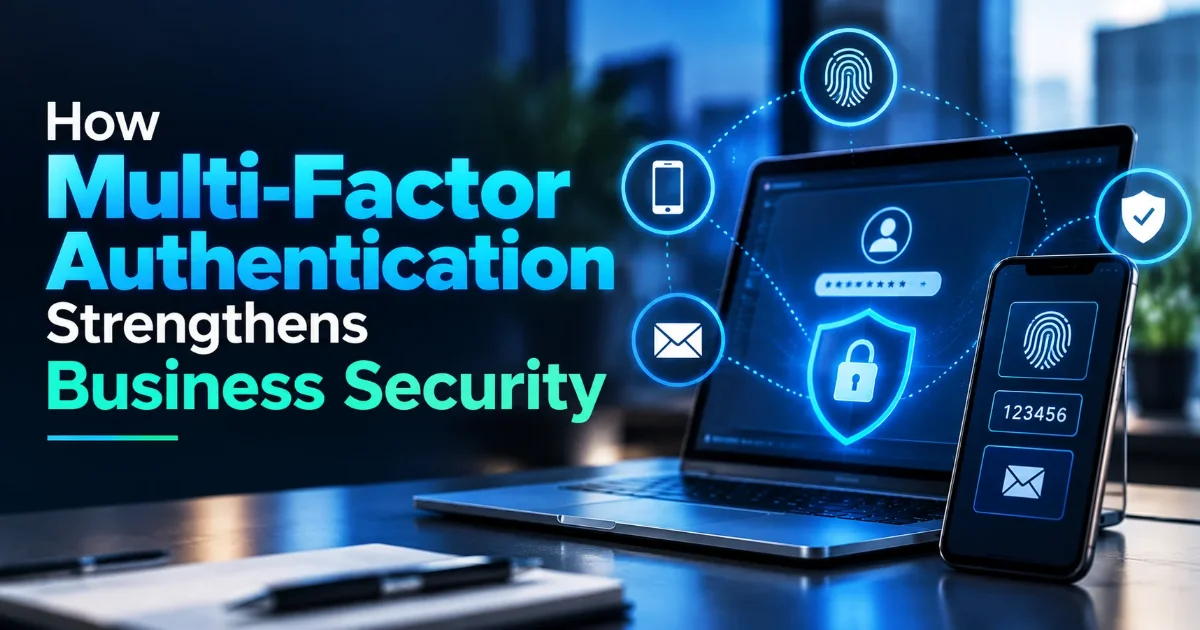
How Multi-Factor Authentication Strengthens Business Security

By: Ganesan D 24 Sep 2026 Category: Cyber Security

Learn how Multi-Factor Authentication strengthens business security, protects accounts from credential-based attacks, and supports secure access across business applications and systems.

Read more...

API Penetration Testing: Why Businesses Should Test Their APIs

By: Ganesan D 23 Sep 2026 Category: Penetration Testing

Learn why API Penetration Testing matters, common API vulnerabilities, testing methods, security risks, and the benefits of regular API security testing.

Read more...

How Businesses Can Identify and Fix Cybersecurity Vulnerabilities

By: Ganesan D 22 Sep 2026 Category: Cyber Security

Learn how businesses can identify, assess, prioritize, and fix cybersecurity vulnerabilities through vulnerability assessment and continuous vulnerability management.

Read more...

How Multi-Factor Authentication Strengthens Business Security

Multi-Factor Authentication strengthens business security

By: Ganesan D 24 Sep 2026 Category: Cyber Security

Introduction 

Businesses increasingly rely on cloud applications, remote access, SaaS platforms, email services, and digital systems to support their daily operations. As more business resources become accessible online, protecting user accounts has become an important part of cybersecurity. 

Passwords have traditionally been the primary method of authentication, but password-based security can be weakened by phishing, credential theft, password reuse, and other attacks. 

Multi-Factor Authentication (MFA) adds an additional layer of verification by requiring users to provide more than one form of authentication before gaining access to a protected account or system. 

For organizations looking to strengthen identity security, multi-factor authentication for businesses can reduce reliance on passwords and make unauthorized account access more difficult. 

What Is Multi-Factor Authentication? 

Multi-Factor Authentication requires users to verify their identity using two or more different authentication factors. 

These factors generally fall into three categories: 

✔ Something you know – Password or PIN 

✔ Something you have – Security key, smartphone, or authentication device 

✔ Something you are – Fingerprint, facial recognition, or another biometric factor 

For example, a user may enter a password and then approve a login using an authentication application. 

By combining multiple authentication factors, MFA security provides an additional security layer beyond the password itself. 

Why Passwords Aren't Enough 

Passwords remain widely used, but they can be exposed through several attack methods. 

Common risks include: 

✔ Phishing attacks 

✔ Credential theft 

✔ Password reuse 

✔ Brute-force attacks 

✔ Credential stuffing 

✔ Weak or predictable passwords 

✔ Password database breaches 

If an attacker obtains a user's password, password-only authentication may provide little resistance to account takeover. 

MFA introduces an additional verification requirement. Even if a password is compromised, the attacker may still need another authentication factor to access the account. 

MFA does not eliminate all account-security risks, but it can significantly strengthen authentication when implemented appropriately. 

MFA Methods 

Organizations can choose from several authentication methods depending on their security requirements and technology environment. 

Authentication Apps 

Authenticator applications generate temporary verification codes or provide login approval notifications. 

Hardware Security Keys 

Physical security keys can provide strong authentication and are particularly useful for protecting privileged or high-value accounts. 

Biometrics 

Fingerprint or facial recognition can be used as an additional authentication factor on supported devices. 

Push Notifications 

Users can approve authentication requests through a trusted mobile device. 

SMS-Based Authentication 

One-time codes can be sent through SMS. However, organizations should carefully consider the security limitations of SMS-based authentication and use stronger methods where appropriate. 

The appropriate MFA method depends on factors such as risk level, user requirements, existing infrastructure, and organizational policies. 

Business Use Cases 

Business MFA can be implemented across many areas of an organization's technology environment. 

Common use cases include: 

✔ Microsoft 365 and business email 

✔ Cloud applications 

✔ VPN and remote access 

✔ Administrative accounts 

✔ SaaS platforms 

✔ Financial applications 

✔ Customer portals 

✔ Privileged accounts 

✔ Remote workforce access 

Organizations should prioritize accounts and systems that provide access to sensitive information or critical business functions. 

MFA Implementation Best Practices 

Implementing MFA effectively requires more than simply enabling a feature. 

Organizations should consider the following MFA best practices: 

1. Prioritize High-Risk Accounts 

Start with administrators, privileged users, remote-access accounts, and accounts containing sensitive information. 

2. Use Strong Authentication Methods 

Where possible, consider phishing-resistant authentication methods and hardware security keys for high-risk accounts. 

3. Apply MFA Consistently 

MFA should be implemented across critical applications and services rather than protecting only one part of the environment. 

4. Establish Recovery Procedures 

Organizations should define secure account-recovery processes for situations where users lose access to their authentication device. 

5. Educate Employees 

Employees should understand why MFA is required and how to recognize suspicious authentication requests or unexpected login prompts. 

6. Monitor Authentication Activity 

Security teams should monitor unusual login patterns, repeated authentication failures, unfamiliar locations, and other suspicious account activity. 

7. Review MFA Policies Regularly 

As business systems and threats change, organizations should periodically review their authentication policies and update MFA configurations where necessary. 

Conclusion 

Passwords alone may not provide sufficient protection for modern business environments. Phishing, credential theft, password reuse, and other attacks can expose user credentials and increase the risk of unauthorized access. 

Multi-Factor Authentication for businesses provides an additional layer of identity verification by requiring users to provide multiple authentication factors. 

From authentication applications and security keys to biometrics and push notifications, businesses can select MFA methods that align with their security requirements. 

By following effective MFA best practices, prioritizing high-risk accounts, educating employees, monitoring authentication activity, and regularly reviewing policies, organizations can strengthen identity security and reduce the risk associated with compromised credentials. 
Are passwords alone protecting your business accounts?

Agan Cyber Security LLC provides MFA Security, Identity and Access Management, Cybersecurity Assessment, and Security Solutions to help organizations strengthen authentication and protect critical business accounts.

Contact us today to assess your authentication security and implement stronger protection for your business.

Latest Blog Posts

How Multi-Factor Authentication Strengthens Business Security

By: Ganesan D 24 Sep 2026 Category: Cyber Security

Learn how Multi-Factor Authentication strengthens business security, protects accounts from credential-based attacks, and supports secure access across business applications and systems.

Read more...

API Penetration Testing: Why Businesses Should Test Their APIs

By: Ganesan D 23 Sep 2026 Category: Penetration Testing

Learn why API Penetration Testing matters, common API vulnerabilities, testing methods, security risks, and the benefits of regular API security testing.

Read more...

How Businesses Can Identify and Fix Cybersecurity Vulnerabilities

By: Ganesan D 22 Sep 2026 Category: Cyber Security

Learn how businesses can identify, assess, prioritize, and fix cybersecurity vulnerabilities through vulnerability assessment and continuous vulnerability management.

Read more...