How SAP Enterprise Resource Planning Can Make Your Team More Productive
By: Ganesan D
20 Dec 2025
Category:
SAP ERP Support & Services
Introduction
In an increasingly competitive business environment, productivity is no longer just about working harder—it’s about working smarter. Modern organizations rely on enterprise resource planning (ERP) software to streamline operations, eliminate silos, and empower teams with real-time data.
Among all solutions, SAP Enterprise Resource Planning stands out as a powerful platform that helps organizations significantly improve workforce productivity.
SAP ERP: One System, One Source of Truth
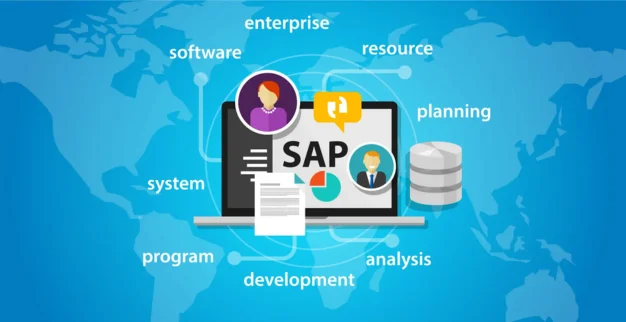
SAP is an ERP system designed to integrate all core business functions into a single SAP enterprise resource planning system. From finance and HR to inventory management, sales, and customer service, SAP ERP software centralizes data and automates workflows.
This reduces manual work, duplicate data entry, and human errors—allowing employees to focus on higher-value strategic tasks.
Solutions such as SAP Business One, SAP Business One software, and SAP B1 software are especially popular among small and mid-sized organizations. Many SAP Business One companies benefit from faster decision-making and improved collaboration because ERP and SAP software provide a unified operational view.
Boosting Collaboration Across Teams
With SAP S/4HANA software and mySAP ERP, teams gain access to real-time dashboards, predictive analytics, and embedded CRM systems. These CRM software modules act as a complete customer relations management system, enabling sales, marketing, and support teams to collaborate seamlessly.
Integrated customer resource management software and customer service management systems ensure faster response times, improved customer satisfaction, and smoother handovers between departments.
Features such as electronic signature capabilities further accelerate approvals and document workflows, improving overall business efficiency.
Productivity Through Automation and Integration
One of the biggest advantages of SAP enterprise resource planning software is automation. Routine processes such as order processing, billing, reporting, and inventory management are handled automatically within the ERP enterprise resource planning system.
This ensures consistency across departments and minimizes reliance on spreadsheets and disconnected tools.
SAP also integrates smoothly with other platforms, including OpenERP Odoo and Odoo ERP software. Whether businesses use SAP computer software alone or alongside an Odoo application, they benefit from a scalable and flexible productivity framework.
Reliable Support for Continuous Performance
Sustained productivity depends on system reliability. Organizations therefore invest in SAP support services such as SAP application support, SAP BASIS support, and SAP technical support services.
Access to the SAP support portal, SAP IT support, and SAP enterprise support ensures minimal downtime and faster issue resolution.
Many enterprises partner with a trusted SAP support company for SAP managed services, SAP remote support, SAP on-site support, SAP upgrade support, and long-term SAP AMC contracts to ensure their ERP systems evolve alongside business needs.
SAP vs Odoo: Choosing the Right Productivity Platform
While Odoo ERP offers flexibility through modular Odoo apps, Odoo demos, transparent Odoo pricing, and services such as Odoo implementation support and Odoo customization support, SAP excels at managing complex enterprise-scale operations.
Some organizations combine SAP with Odoo software depending on specific requirements, supported by Odoo enterprise support, Odoo SaaS support, and Odoo managed services.
Conclusion
By unifying processes, enabling collaboration, and automating routine tasks, SAP Enterprise Resource Planning software transforms how teams work.
With the right mix of SAP ERP consulting, powerful ERP systems, and expert support services, businesses can unlock higher productivity, faster growth, and long-term operational excellence.