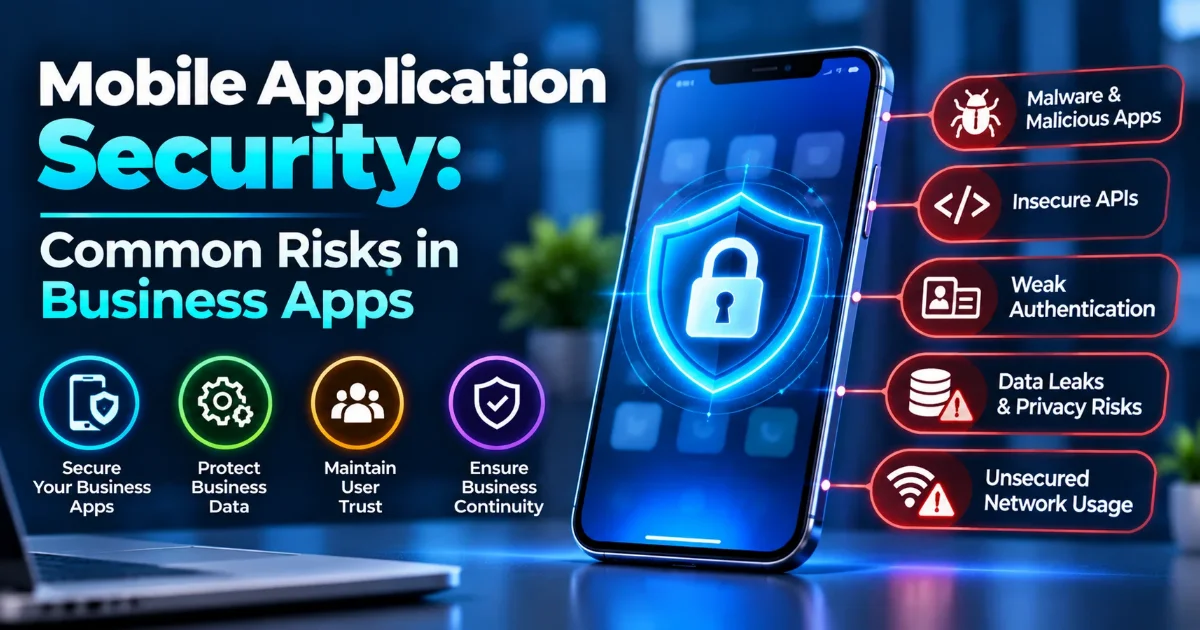
Mobile Application Security: Common Risks in Business Apps
By: Ganesan D
4 Nov 2026
Category:
Cyber Security
Introduction
Businesses increasingly depend on mobile applications for customer communication, payments, employee access, and daily operations. However, poorly secured applications can expose sensitive information and create opportunities for cyberattacks. Implementing strong mobile application security helps businesses protect user data, maintain application reliability, and reduce security risks.
What Is Mobile Application Security?
Mobile application security involves protecting mobile apps, their data, APIs, and communication channels from cyber threats and unauthorised access. It includes secure development, authentication, encryption, vulnerability testing, and continuous monitoring.
Businesses focusing on mobile app security in the UAE should integrate security measures throughout the application development and maintenance lifecycle.
Common Security Risks in Business Apps
Business applications may face several security challenges:
-
Insecure Data Storage:
Sensitive information stored without adequate encryption can be exposed if a device is compromised.
-
Weak Authentication:
Poor password controls and missing multi-factor authentication can allow unauthorised access.
-
Insecure APIs:
Weak API authentication or excessive permissions may expose backend services and business data.
-
Outdated Components:
Vulnerable libraries and frameworks can create exploitable weaknesses.
-
Improper Session Management:
Poorly protected sessions may allow attackers to access active user accounts.
-
Insufficient Input Validation:
Untrusted inputs can lead to injection attacks and application manipulation.
Insecure Data Storage and Communication
Mobile apps may store credentials, customer records, access tokens, and other sensitive information on devices. If this data is stored in plain text or insecure locations, attackers may retrieve it through device compromise or malicious applications.
Applications should use platform-provided secure storage mechanisms, encrypt sensitive information, and avoid storing unnecessary confidential data locally.
Communication between mobile apps, APIs, and backend servers should use properly configured HTTPS and modern TLS protocols. Certificate validation and secure session handling also help protect information during transmission.
Authentication and API Vulnerabilities
Weak authentication can expose business applications to credential theft, account takeover, and unauthorised transactions.
Businesses should implement multi-factor authentication, secure password policies, account lockout or risk-based controls, and appropriate session expiration.
APIs should enforce authentication and authorisation on the server side. Apply rate limiting, validate requests, restrict permissions, and monitor unusual API activity to reduce abuse.
Malware and Reverse Engineering
Attackers may use malicious applications, compromised devices, or modified app packages to target business applications. Reverse engineering can also expose application logic, embedded secrets, and weaknesses in security controls.
Businesses should avoid embedding API keys and credentials in application code, protect sensitive operations on the server side, and use code obfuscation where appropriate. Mobile threat monitoring can help identify suspicious application or device behaviour.
Mobile Application Security Testing
Mobile application security testing helps identify vulnerabilities before attackers exploit them. Testing should cover:
-
Static Application Security Testing (SAST).
-
Dynamic Application Security Testing (DAST).
-
Mobile application penetration testing.
-
API security assessments.
-
Insecure data storage and communication checks.
-
Authentication and authorisation testing.
Businesses seeking mobile application security in Dubai should conduct regular assessments after major application updates and changes to backend services.
Mobile App Security Best Practices for UAE Businesses
-
Follow secure software development practices.
-
Encrypt sensitive information at rest and in transit.
-
Use secure authentication and session management.
-
Protect APIs through access controls and continuous monitoring.
-
Update application dependencies and operating systems regularly.
-
Minimise permissions and data collection.
-
Perform security testing before releases.
-
Establish a process for vulnerability reporting and remediation.
Adopting these mobile app security best practices for UAE businesses helps reduce application risks and protect customer and corporate information.
Frequently Asked Questions
1. Why Is Mobile Application Security Important?
It helps protect sensitive information, prevent account compromise, and reduce vulnerabilities in business applications.
2. How Often Should Mobile Apps Undergo Security Testing?
Test before major releases and conduct regular assessments, particularly after significant code, API, or infrastructure changes.
3. What Is Secure Mobile App Development?
It involves integrating security into application design, coding, testing, deployment, and maintenance rather than treating security as a final step.
Conclusion
Mobile applications are essential to modern business operations, but they also introduce security risks. Strong authentication, secure data storage, protected APIs, and regular security testing help businesses build safer applications.
Secure Your Business Applications with Agan Cyber Security LLC
Secure your business applications with Agan Cyber Security LLC. Our cybersecurity services can help identify mobile application vulnerabilities, assess API security, and strengthen your digital environment.
Contact our team to discuss secure mobile app development and mobile application security requirements in Dubai and across the UAE.
Contact us today to discuss your cybersecurity requirements.