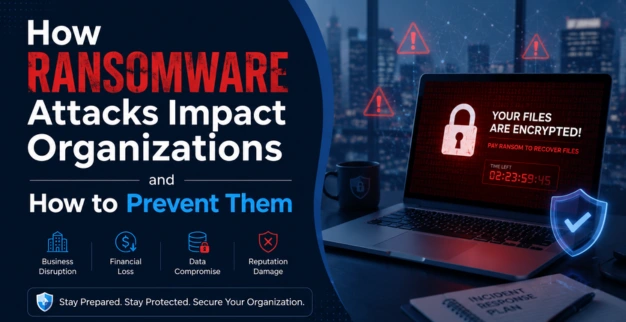
How Ransomware Attacks Impact Organizations and How to Prevent Them
13 June 2026
Cybercrime continues to evolve at an alarming rate, and ransomware attacks have emerged as one of the most damaging cyber threats facing organizations today. Businesses across industries—including healthcare, finance, retail, and manufacturing—are increasingly targeted by cybercriminals seeking financial gain.
A successful ransomware attack can disrupt operations, compromise sensitive data, and result in significant financial losses. Therefore, implementing strong ransomware protection, effective threat detection, and professional cyber security services is essential for modern organizations.
What is Ransomware?
Ransomware is a type of malicious software designed to block access to systems or encrypt critical files until a ransom is paid. Attackers typically demand payment in cryptocurrency in exchange for restoring access to the affected data.
Modern ransomware groups often use double extortion tactics, where they not only encrypt files but also steal sensitive information and threaten to publish it if the ransom is not paid.
Common types of ransomware include:
- Crypto ransomware that encrypts files
- Locker ransomware that locks devices
- Double extortion ransomware that steals and encrypts data
- Ransomware-as-a-Service (RaaS) offered by cybercriminal groups
How Ransomware Attacks Work
Ransomware attacks generally follow a structured process that allows attackers to infiltrate and spread across networks.
The attack lifecycle typically includes:
- Initial access through phishing emails or vulnerable systems
- Malware execution on compromised devices
- Lateral movement across networks
- Encryption of critical data and systems
- Ransom demand with payment instructions
In many cases, attackers remain undetected for days or even weeks before launching the final attack.
Business Impact of Ransomware Attacks
A ransomware incident can have severe consequences for organizations.
Financial Impact
Businesses may experience:
- Revenue loss due to operational downtime
- Costs associated with recovery and remediation
- Regulatory fines and legal expenses
- Increased cybersecurity investments after an attack
Operational Impact
Ransomware can disrupt daily business activities by:
- Shutting down critical applications
- Interrupting customer services
- Delaying business operations
- Affecting employee productivity
Reputational Impact
Security incidents often damage customer trust and brand reputation.
Organizations may face:
- Loss of customer confidence
- Negative publicity
- Reduced stakeholder trust
- Long-term reputational damage
Common Entry Points
Cybercriminals exploit security weaknesses to gain access to systems.
Common entry points include:
- Phishing emails containing malicious links or attachments
- Weak or reused passwords
- Unpatched software vulnerabilities
- Misconfigured remote access services
- Compromised third-party vendors and applications
Human error remains one of the leading causes of successful ransomware attacks.
Prevention Strategies
Organizations can significantly reduce ransomware risks by adopting proactive security measures.
Effective Ransomware Protection
- Implement multi-factor authentication (MFA) to strengthen access security
- Regularly patch operating systems and applications
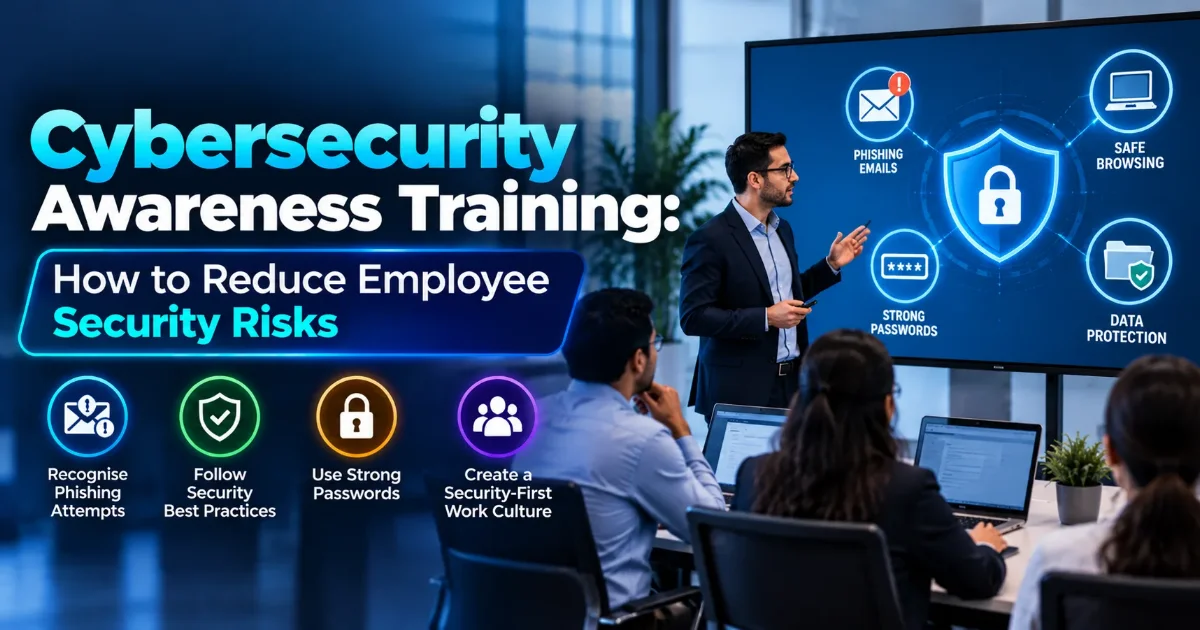
- Conduct cybersecurity awareness training for employees
- Maintain secure offline and cloud backups
- Deploy endpoint detection and response (EDR) solutions
- Perform regular vulnerability assessments
Professional cyber security services help businesses continuously monitor threats and improve security posture.
Incident Response Tips
If a ransomware attack occurs, immediate action is critical to reduce damage.
Organizations should:
- Isolate infected systems from the network
- Activate the incident response plan
- Notify cybersecurity teams and stakeholders
- Preserve logs and forensic evidence
- Restore systems using verified backups
Early threat detection and rapid response significantly improve recovery outcomes.
Conclusion
Ransomware attacks continue to evolve and pose significant risks to organizations worldwide. A single incident can lead to financial losses, operational disruption, and reputational damage.
By implementing strong ransomware protection, investing in threat detection, and leveraging expert cyber security services, businesses can strengthen resilience and minimize the impact of cyber threats.
Proactive cybersecurity is no longer optional—it is essential for long-term business continuity and growth.