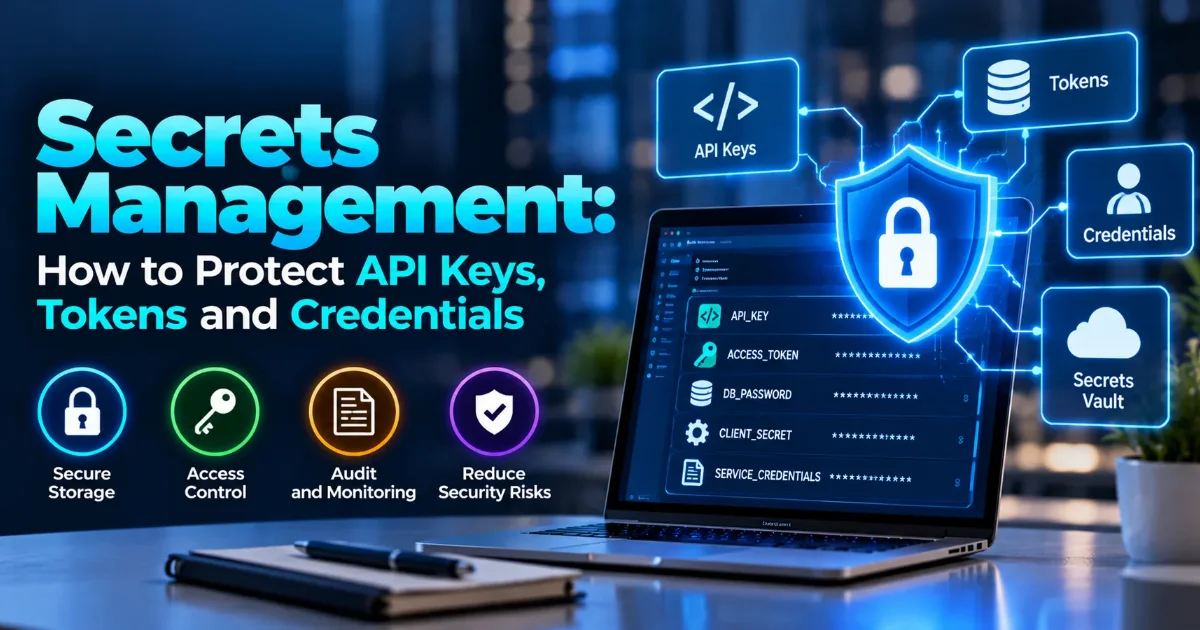
Secrets Management: How to Protect API Keys, Tokens and Credentials
By: Ganesan D
29 Oct 2026
Category:
Cyber Security
Introduction
Modern business applications rely on API keys, access tokens, passwords, and other sensitive information to connect systems and authenticate users. If these secrets are exposed, attackers may gain unauthorised access to applications, cloud resources, and confidential data. Effective secrets management helps businesses protect credentials and reduce security risks.
What Is Secrets Management?
Secrets management is the process of securely storing, accessing, rotating, and monitoring sensitive authentication information used by applications, services, and infrastructure.
A secrets management service provides controlled access to secrets instead of leaving them in source code, configuration files, or unsecured documents. For UAE businesses, this approach helps strengthen application security and protect critical systems.
Types of Secrets: API Keys, Tokens and Credentials
Common secrets used across business applications and IT infrastructure include:
-
API Keys:
Identify or authenticate applications accessing APIs.
-
Access Tokens:
Grant temporary or scoped access to applications and resources.
-
Passwords:
Authenticate users and service accounts.
-
Database Credentials:
Allow applications and authorised services to connect to databases.
-
Encryption Keys:
Protect sensitive information through cryptographic operations.
-
Certificates and Private Keys:
Support secure communication and identity verification.
Each secret should have appropriate access restrictions, storage controls, and lifecycle management to minimise the risk of unauthorised use.
Common Secrets Management Security Risks
Poor handling of secrets can expose businesses to several security threats. Common risks include:
-
Hardcoded Credentials:
Secrets embedded in application code may be exposed through source code repositories and shared development projects.
-
Unsecured Storage:
Credentials saved in plain-text files, spreadsheets, or shared documents can be accessed by unauthorised users.
-
Excessive Permissions:
Overprivileged credentials may allow attackers to access multiple systems and sensitive resources.
-
Long-Lived Credentials:
Tokens and keys that are rarely rotated may remain useful to attackers for extended periods.
-
CI/CD Exposure:
Build logs, deployment scripts, and pipeline variables may unintentionally reveal sensitive values.
Identifying these risks and implementing appropriate controls can reduce credential exposure and limit the impact of compromised secrets.
How Secrets Management Works
A centralised secrets management platform stores sensitive values in a protected vault. Applications and authorised users authenticate to the platform, and access policies determine which secrets they can retrieve.
Depending on the solution, the platform can support encryption, access logging, automated rotation, and temporary credentials. Centralised secrets management also helps security teams review access activity and respond when credentials are compromised.
For secrets management in CI/CD pipelines, applications and authorised workflows retrieve approved secrets securely during builds or deployments instead of storing them directly in source code. Short-lived credentials and workload identity can further reduce exposure.
Secrets Management Tools and Technologies
Businesses can evaluate several secrets management platforms based on their infrastructure, security requirements, and development workflows. Common solutions include:
-
HashiCorp Vault:
Supports centralised secrets storage, access policies, and dynamic secrets for supported integrations.
-
Azure Key Vault:
Helps protect secrets, cryptographic keys, and certificates within Microsoft Azure environments.
-
AWS Secrets Manager:
Supports secure secrets storage, retrieval, and rotation integrations for AWS workloads.
-
Google Cloud Secret Manager:
Provides managed storage, access controls, and version management for secrets in Google Cloud.
When selecting an API key management service, assess integration requirements, access policies, audit logging, rotation support, and compatibility with existing cloud and development environments.
Secrets Protection Best Practices for UAE Businesses
Organisations can strengthen credential security by following these secrets management best practices:
-
Use a Dedicated Secrets Vault:
Store sensitive credentials in a dedicated secrets management platform rather than embedding them in source code or unsecured files.
-
Apply Least-Privilege Access:
Restrict access to secrets based on user roles, application requirements, and business responsibilities.
-
Rotate Credentials Regularly:
Establish appropriate rotation policies and replace exposed or compromised credentials immediately.
-
Use Short-Lived Credentials:
Prefer temporary tokens and workload identities where supported to reduce the exposure window.
-
Enable Audit Logging and Alerts:
Monitor access to sensitive secrets and investigate unusual retrieval activity.
-
Scan Repositories and CI/CD Pipelines:
Use appropriate security tools to detect accidentally exposed API keys, passwords, and tokens.
-
Respond Quickly to Exposure:
Revoke or rotate compromised credentials, investigate potential misuse, and address the underlying cause.
Frequently Asked Questions
1. Why Is Secrets Management Important?
Secrets management helps prevent credential exposure, unauthorised access, and misuse of application or cloud resources. It also supports access monitoring, credential rotation, and security incident response.
2. Should API Keys Be Stored in Environment Variables?
Environment variables can be useful in some deployments, but they are not a complete secrets management solution. Depending on the environment, variables may be exposed through process inspection, debugging, logs, or misconfigured systems. A dedicated vault or managed identity approach can provide stronger controls.
3. How Often Should Secrets Be Rotated?
Rotation frequency depends on the secret type, risk level, and organisational policy. Credentials should be rotated immediately when compromise is suspected, and automated rotation should be implemented wherever supported.
Conclusion
Secrets management is essential for protecting API keys, tokens, passwords, and other credentials across business applications. Centralised storage, restricted access, automated rotation, and secure CI/CD integration help reduce the risk of credential-based attacks.
By adopting appropriate secrets management practices, businesses can improve application security, strengthen access controls, and reduce the risk of sensitive credentials being misused.
Strengthen Your Application Security with Agan Cyber Security LLC
Protecting API keys, access tokens, and credentials requires effective access controls, secure storage, and continuous security monitoring. Agan Cyber Security LLC helps businesses assess cybersecurity risks, strengthen security controls, and protect critical digital environments.
Explore our cybersecurity services to identify credential-related risks, improve application security, and protect your business systems in Dubai and across the UAE.
Contact us today to discuss your cybersecurity requirements.