What Is SIEM? A Simple Guide to Security Information and Event Management
05 Feb 2025
Category: Security Operation
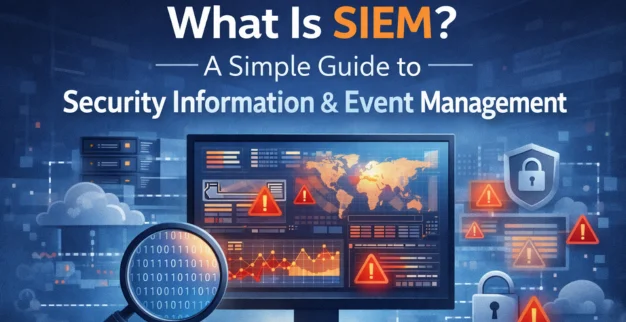
Organizations today produce enormous data streams every second which come from their servers firewalls applications cloud platforms and user activities. The task of manual information handling and monitoring becomes unmanageable when data volumes reach this extent. SIEM security information and event management systems help organizations safeguard their networks through real-time threat detection and analysis which enables security teams to respond to active threats.
The SIEM security information and event management system operates through two essential processes which involve collecting security information (information management) and analyzing security events to detect potential security breaches (event management). The two systems work together to deliver an all-encompassing view of an organization’s complete security status.
How SIEM Works in IT Security
The SIEM tool collects log data and event information from all parts of the IT environment, which includes network devices and servers and databases and applications and endpoints. The system processes all collected data through normalization and correlation methods to detect any suspicious activities that might signal a security breach.
The SIEM dashboard provides IT teams with a comprehensive view of their system security because it shows all possible threats and compliance violations and operational hazards at once. Organizations can make quicker decisions and handle incidents more effectively through centralized system visibility.
Key Benefits of SIEM Solutions
1. Centralized Security Visibility
SIEM solutions collect data from all security sources into one platform. Security teams require a unified view to understand organizational activities because they need to monitor the entire organization instead of using separate tools.
2. Real-Time Threat Detection
The SIEM tool performs ongoing analysis of incoming events to find patterns that show signs of unusual activity. SIEM uses event correlation to detect advanced attacks which would remain hidden during single system monitoring.
3. Faster Incident Response
SIEM security incident event management system alerts security teams about security incidents by delivering alerts which contain contextual information. This enables IT and security teams to conduct their investigation work while determining the situation's impact and executing necessary response activities.
4. Reduced Alert Noise
Organizations typically handle more than 1000 alerts every day. SIEM systems use their filtering capabilities to establish priority levels of alerts which enable security teams to concentrate on actual threats while eliminating time spent on non-existent threats.
5. Compliance and Reporting
The majority of regulations mandate organizations to maintain security event records through their monitoring practices. SIEM solutions enable organizations to meet compliance requirements by providing secure log storage and automatic generation of audit-ready reports which cover ISO HIPAA PCI-DSS and GDPR compliance standards.
6. Insider Threat Detection
Not all threats come from outside. SIEM tools can identify insider risks through their capability to monitor user behavior which includes detection of unauthorized access attempts and irregular data transfer activities.
7. Scalability for Modern Environments
The present IT environments of today use cloud services and remote work capabilities together with hybrid infrastructure systems. The contemporary SIEM system security information and event management platforms possess the ability to expand and modify their operations to handle intricate system configurations.
Why SIEM Is Essential Today
Cyber threats have evolved into multifaceted criminal activities which attackers conduct across multiple platforms to evade detection. SIEM systems link data points which enables them to show organizations their complete security situation. Organizations that seek to enhance their security operations with improved visibility and quicker response times and better control capabilities must treat SIEM as an essential requirement.
Conclusion
The modern cybersecurity operations depend on SIEM as their foundational system. SIEM solutions enable organizations to establish their security posture through their combined capabilities of log management and real-time monitoring and intelligent analysis. Your organization can achieve enhanced security outcomes through the successful implementation of an appropriate SIEM solution.
Take Action: Your organization can enhance IT security and risk management capabilities against emerging cyber threats through the assessment of SIEM security information and event management solutions which will remain effective until 2026 and beyond.