SOC 2.0: How Modern SOCs Use AI and Automation
09 Feb 2026
Category: Security Operation
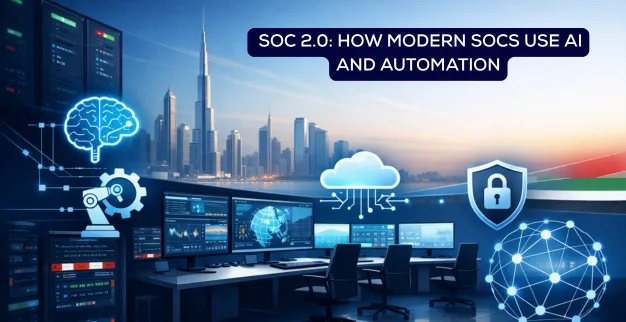
Cybersecurity has entered a new phase where speed and intelligence matter more than ever. Traditional security operations relied heavily on manual monitoring and reactive incident handling. Today's cyber attackers use automated methods to execute continuous attacks that can successfully penetrate outdated security systems within a few minutes. Organizations now embrace SOC 2.0 as their standard security operations center model which uses AI and automation and advanced SIEM systems to protect their networks.
SOC 2.0 transforms SOC service delivery by changing the response process from alerts to prevent security breaches through intelligence protection. The system enables security operations centers to detect and investigate threats and execute responses with improved speed and precision through its unified SIEM system and automated operational processes.
What Is SOC 2.0?
The traditional SOC structure managed security alerts while conducting incident response work after security breaches happened. SOC 2.0 represents the next generation of SOC IT security which combines AI-powered analytics with automation and contextual intelligence to improve SOC information security operations.
SIEM security information and event management serves as the main component which supports all SOC 2.0 functions. A modern SIEM tool collects and correlates data across endpoints, cloud platforms, applications, and the SOC network. The system provides continuous monitoring capabilities which enable organizations to make intelligent decisions based on real-time data.
How AI and Automation Power SOC 2.0
1. Intelligent Threat Detection
AI improves security information event management SIEM capabilities by processing extensive data streams at actual time intervals. AI systems discover unfamiliar threats through their ability to detect unusual behavior patterns which operate outside the limits of standard rule-based requirements.
2. Automated Incident Response
SOC 2.0 uses security incident and event management SIEM to handle automated security procedures which include system isolation for infected devices and malicious IP blocking and critical alert escalation. The system cuts down response durations from several hours to just two minutes.
3. SIEM and SOC Integration
SOC 2.0 depends on SIEM IT platforms which function as its primary infrastructure. The combination of threat intelligence user behavior analytics and automation functions allows SIEM security incident event management to help SOC teams distinguish between genuine security threats and non-threatening alerts.
4. Reduced Analyst Workload
SOC analysts experience difficulty when they need to manage continuously incoming alerts. The AI-driven SIEM system detects false alerts while it presents vital security incidents which enables analysts to dedicate time for battle investigation and security research.
5. Continuous Network and Insider Monitoring
SOC 2.0 operates by tracking user activities at all times throughout the entire network and SOC system. Security incident event management systems identify insider threats and lateral movement before they escalate into major breaches.
6. Proactive Security Operations
SOC 2.0 operates as a proactive security system which differs from traditional security models. Security information and event management platforms use historical data and machine learning to predict attack patterns, strengthening defenses in advance.
7. Scalable and Future-Ready SOC Services
Modern SOC services provide flexible operational capabilities which extend to cloud and hybrid and remote working environments. AI-powered SIEM tools can quickly adjust their operations to match newly emerging technologies and danger threats which ensures they will remain secure across long-term periods.
Conclusion
SOC 2.0 brings a comprehensive transformation to cybersecurity operations. The combination of AI and automation and advanced security information and event management systems enables modern security operations centers to protect against threats through ongoing automated security measures. Organizations that adopt SOC 2.0 gain faster response times, reduced risk, and stronger visibility across their entire IT environment.
Take Action: Upgrade your SOC services with AI-driven SIEM security incident event management and embrace SOC 2.0 to protect your business against evolving cyber threats in 2026 and beyond.