What Tools Are Used in a SOC? Essential Technologies Explained
08 Jan 2026
Category: Security Operation
Role of Tools in a Security Operations Center
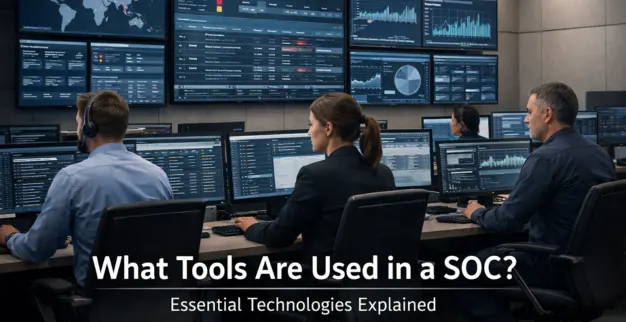
A Security Operations Center (SOC) cannot operate effectively without the right set of tools. While skilled analysts are essential, they rely heavily on advanced SOC tools to monitor systems, detect threats, and respond to incidents as they occur. These SOC IT security tools form the backbone of SOC operations and help organizations stay protected against constantly evolving cyber threats.
Simply put, SOC tools provide security teams with three critical capabilities: visibility, speed, and accuracy. These elements are essential for any business aiming to protect its digital assets and maintain operational continuity.
SIEM Tools and Log Management
At the core of most SOC environments is the SIEM (Security Information and Event Management) system. SIEM tools collect and analyze logs from across the IT environment, including servers, firewalls, applications, and endpoints.
By correlating events in real time, SIEM platforms help uncover suspicious activities that might otherwise go unnoticed. For any security-conscious organization, SIEM tools are essential for threat detection, compliance reporting, and detailed incident investigations.
Threat Detection & Monitoring Tools
Threat detection tools continuously scan networks and systems to identify potentially malicious behavior. These tools use threat intelligence feeds, behavioral analysis, and anomaly detection to detect attacks at the earliest possible stage.
By enabling proactive monitoring, SOC IT security tools reduce the need for reactive firefighting. This allows SOC teams to stop threats before they escalate into serious security incidents.
Incident Response and Automation Tools
Once a threat is confirmed, speed becomes critical. Incident response tools help SOC teams contain damage, investigate root causes, and remediate security breaches quickly and effectively.
Many modern SOCs also use automation and orchestration tools to handle repetitive tasks. Automation reduces manual workload and allows analysts to focus on high-priority threats, improving both response times and overall security effectiveness.
Endpoint and Network Security Tools
Endpoints such as laptops, servers, and mobile devices are frequent targets for cyberattacks. Endpoint Detection and Response (EDR) tools continuously monitor these devices and provide rapid containment when suspicious activity is detected.
In addition, network security tools used in a SOC—such as firewalls, intrusion detection systems (IDS), and intrusion prevention systems (IPS)—monitor data traffic and identify unauthorized access attempts. Together, endpoint and network tools deliver complete visibility across the organization’s infrastructure.
How Tools Work Together in a SOC
The real strength of SOC tools lies in their integration. SIEM platforms centralize data, threat detection tools identify risks, endpoint and network tools provide context, and incident response tools take action.
This coordinated approach ensures smooth SOC operations and faster threat neutralization. A well-integrated SOC IT security toolset gives businesses a strong, unified defense against cyber threats.
Get SOC Tool Consultation
Choosing the right Security Operations Center (SOC) tools can be complex and time-consuming. However, you don’t have to navigate this process alone. Agan Cyber Security helps organizations identify and build the right SOC toolset based on their risk profile and operational requirements.
Book a SOC tool consultation today and strengthen your security operations with confidence.