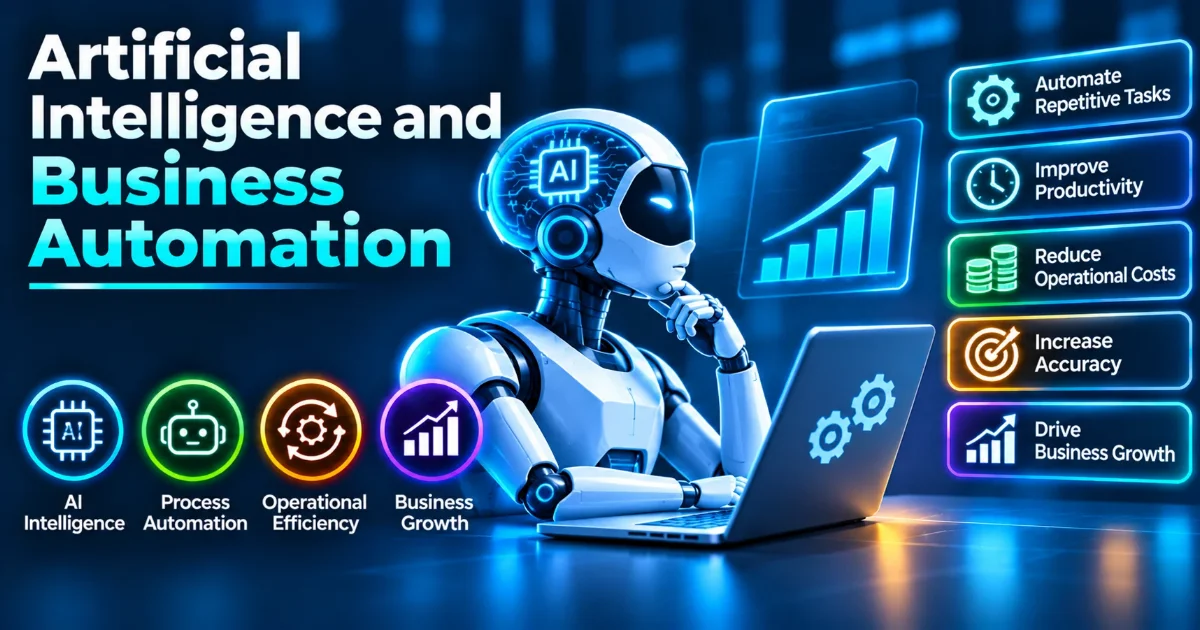
Artificial Intelligence and Business Automation
By: Ganesan D
23 Nov 2026
Category:
Custom
Introduction
More businesses are looking to introduce Artificial Intelligence (AI) into their processes to increase efficiency, reduce repetitive tasks and make faster decisions. Whereas traditional automation carries out tasks according to predefined rules, AI automation can analyse data, identify patterns and support informed decision-making.
Using AI within business process automation can help streamline many areas of a business, including Finance, Human Resources, Customer Service, Sales and Operations. Businesses looking to implement business process automation in Dubai have an opportunity to improve workflows, information management and overall operational efficiency.
What Is AI and Business Automation?
Intelligent automation combines artificial intelligence technologies with automation tools to complete business tasks more efficiently.
Traditional automation carries out predefined actions, such as transferring data between applications and generating scheduled reports. AI-powered automation goes further by understanding and processing documents, identifying patterns, making predictions and classifying information.
For example, an automated invoice processing system can use AI to extract supplier information, identify invoice amounts and validate the data. The information can then be forwarded for approval. Exceptions can be reviewed by employees, while important transactions can be authorised by the appropriate personnel.
Types of AI Automation
Businesses can use different AI technologies to automate tasks and improve operational processes. Some commonly used AI automation technologies include:
-
Robotic Process Automation (RPA):
Automates rule-based and repetitive processes such as data entry, report creation and information sharing.
-
Intelligent Document Processing (IDP):
Uses AI and Optical Character Recognition (OCR) to classify documents and extract important information.
-
Natural Language Processing (NLP):
Helps systems understand and process human language in emails, documents and customer messages.
-
Machine Learning:
Analyses historical data to identify patterns, classify information and generate predictions.
-
AI Chatbots and Virtual Assistants:
Handle frequently asked questions and provide information to customers and employees.
-
AI-Powered Workflow Automation:
Integrates AI into business applications to manage workflows involving multiple steps and processes.
These technologies can be used individually or combined as part of a comprehensive business automation strategy.
Business Processes Suitable for AI Automation
Not every business function requires AI. However, intelligent automation can be particularly useful for processes that are repetitive, high-volume or involve regular document handling and data processing.
Some common business areas suitable for intelligent automation include:
-
Finance and Accounting:
Processing invoices, categorising expenses, sending payment reminders and entering financial data.
-
Human Resources:
Supporting CV screening, employee onboarding, document validation and leave request processing.
-
Customer Service:
Categorising customer queries, providing chatbot support, routing support tickets and suggesting relevant responses.
-
Sales and Marketing:
Categorising leads, segmenting customers, analysing campaigns and automating follow-up activities.
-
Procurement and Operations:
Processing purchase orders, managing supplier documentation and generating inventory-related alerts.
Choosing the right processes allows organisations to identify automation opportunities that deliver measurable business value.
AI Integration with Existing Business Systems
AI automation becomes particularly useful when integrated with the applications already used within a business. AI tools can be connected with ERP, CRM and accounting systems through APIs, connectors and integration platforms.
For example, an AI-powered workflow can receive a customer query, categorise the request and retrieve relevant information from the CRM system. It can then forward the query to the appropriate department for further action.
Successful integration requires appropriate data access, system compatibility, security controls and clearly defined workflow responsibilities. Businesses should establish which tasks can be completed automatically and which require human approval.
Improving Productivity Through AI Automation
AI-powered business automation can improve productivity and operational efficiency in several ways.
-
Automation:
Saves time by reducing repetitive tasks and eliminating unnecessary data duplication.
-
Speed:
Streamlines document processing, customer queries and business transactions.
-
Consistency:
Uses standardised rules and validation processes to improve the consistency of business operations.
-
Business Insights:
Extracts useful information from business data to support better decision-making.
-
Employee Productivity:
Allows employees to focus on customer relationships, problem-solving and strategic activities instead of repetitive administrative work.
By implementing AI business process automation in Dubai, organisations can improve operational efficiency while ensuring employees remain involved in important business decisions.
Implementation Challenges
Although AI automation offers several benefits, successful implementation requires careful planning. Businesses should understand the potential challenges before introducing intelligent automation into their operations.
Some common implementation challenges include:
-
Data Quality:
Incomplete or inaccurate data can affect AI outputs and reduce automation effectiveness.
-
Integration Complexity:
Connecting AI tools with existing or legacy systems may require additional development and configuration.
-
Security:
Sensitive business information requires appropriate access controls, encryption and data protection measures.
-
Implementation Costs:
Software licensing, infrastructure, integration and ongoing maintenance can increase operational costs.
-
Employee Training:
Employees need proper training to understand how AI automation affects their responsibilities and workflows.
-
Accuracy:
AI-generated outputs may contain errors, making human validation important for critical business decisions.
A phased implementation approach helps businesses overcome these challenges, evaluate performance and measure results before expanding automation across additional departments.
Future Applications of AI in Business Automation
AI automation is expected to support increasingly complex business processes. Emerging applications include AI agents, predictive maintenance, intelligent logistics, advanced customer service and automated business reporting.
Organisations adopting these technologies will need to balance automation capabilities with security, transparency, accountability and appropriate human oversight.
Frequently Asked Questions
1. What Is the Difference Between AI Automation and Traditional Automation?
Traditional automation follows predefined rules to complete specific tasks. AI automation can analyse data, identify patterns, process information and support decision-making using intelligent models.
2. Can AI Automate an Entire Business Process?
Some business processes can be automated to a large extent. However, processes involving complex decisions, approvals and unexpected exceptions may still require human intervention.
3. Is AI Automation Suitable for Small Businesses?
Yes. Small businesses can start with specific processes where automation provides practical benefits, such as document management, customer queries and repetitive administrative tasks.
4. How Can Businesses Start Implementing AI Automation?
Businesses can begin by identifying repetitive processes, assessing data quality, selecting suitable technology solutions, establishing security controls and starting with a measurable pilot project.
Conclusion
Artificial Intelligence is transforming the way businesses operate. By using AI technologies, organisations can automate business processes, reduce repetitive tasks, improve productivity and make better use of their business data.
Agan Cyber Security LLC can help your business utilise the right technology solutions to support secure digital transformation and improve operational efficiency. Speak to our team today to explore automation solutions that suit your organisation in Dubai and across the UAE.