RPA Bot Lifecycle Management: From Development to Deployment and Maintenance
By: Ganesan D
20 Nov 2026
Category:
Custom
Introduction
Robotic Process Automation allows businesses to automate repetitive and rule-based tasks such as invoice processing, data entry, report creation and updating customer records. To ensure automation runs consistently well, each bot needs to be carefully planned, developed, tested, deployed and maintained.
RPA Bot Lifecycle Management ensures that your automation processes are managed throughout their lifecycle. This helps ensure your bots run reliably, reduce errors, improve performance and adapt to changing business requirements.
Understanding RPA Bot Lifecycle Management is key for businesses looking to use Robotic Process Automation within the UAE.
What Is RPA Bot Lifecycle Management?
RPA Bot Lifecycle Management includes all aspects of an automation solution, from identifying the right processes to automate to managing, updating and eventually retiring bots.
A managed lifecycle ensures bots operate efficiently in line with business requirements, security standards and application compatibility.
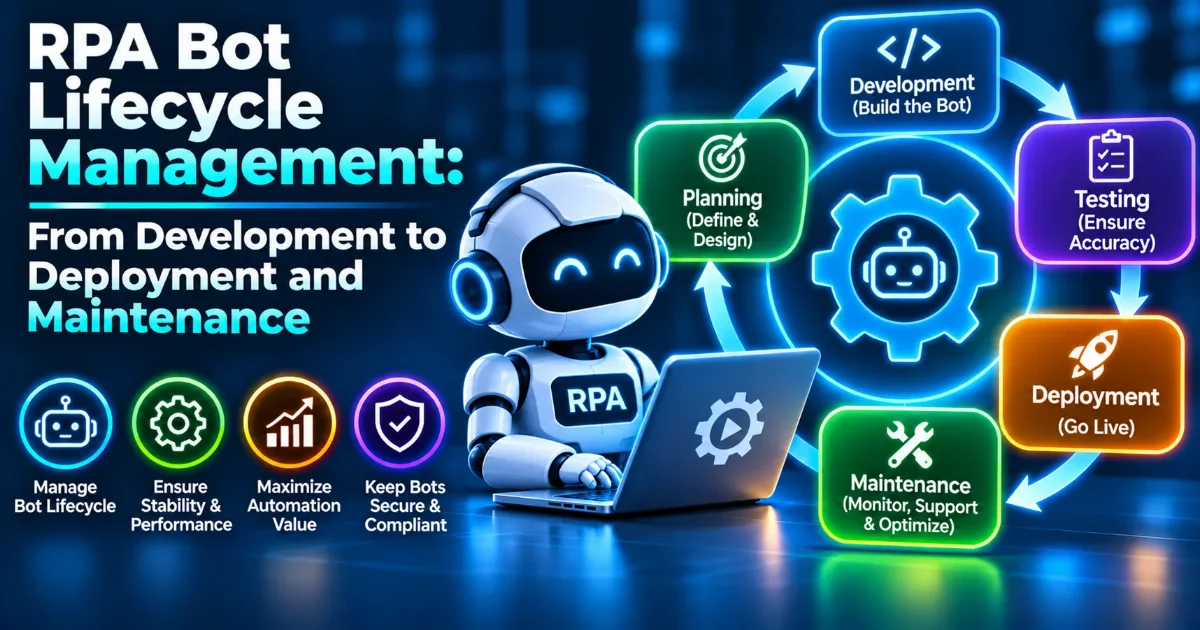
The key stages of an RPA bot lifecycle include:
- Bot Development
- Testing and Validation
- Deployment
- Performance Monitoring
- Updates and Maintenance
- Scaling and Optimisation
All these stages help ensure your automation remains reliable and delivers long-term business value.
1. RPA Bot Development
Bot development starts by identifying repetitive and rule-based processes that can be automated. Processes are often identified by reviewing transaction volumes, frequency, complexity and the amount of manual work that can be reduced.
Once a suitable process has been identified, the automation solution is designed to include:
- Process Mapping.
- Input and Output Requirements.
- Automation Workflows.
- Application Integration.
- Bot Credentials and Permissions.
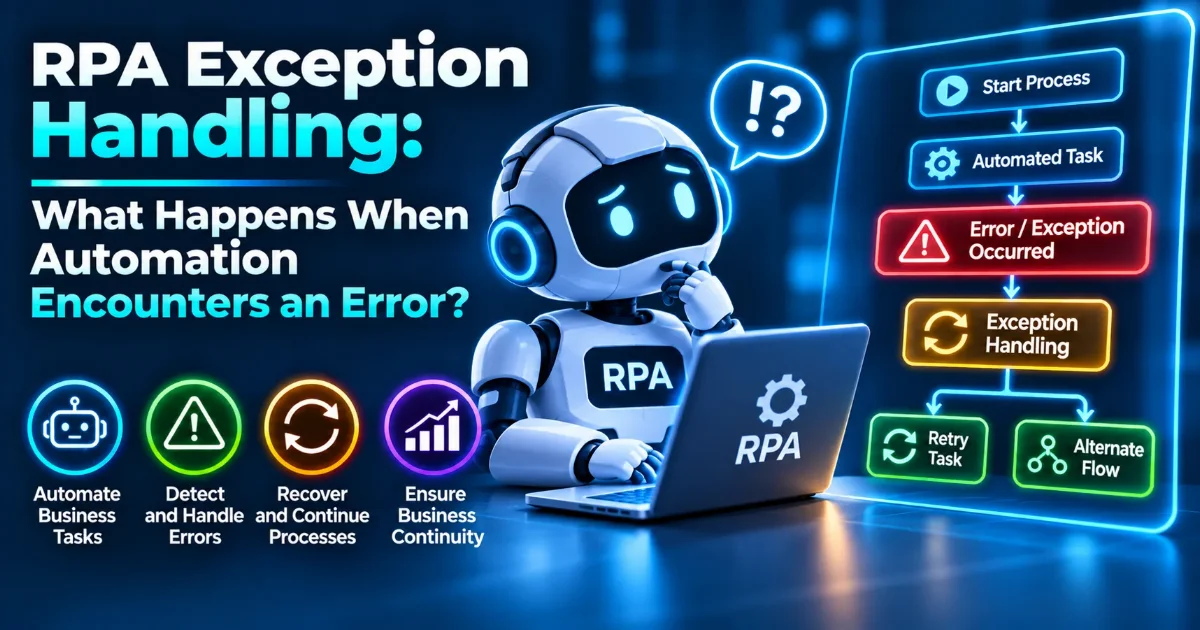
- Exception Handling Design.
For example, a bot can be designed to process invoices by collecting invoice documents, extracting key information, validating data and updating an accounting system.
2. Testing and Validation
Before deployment, every bot should be thoroughly tested. This ensures that it performs its assigned tasks correctly and handles unexpected situations effectively.
Some important tests to complete include:
-
Functional Testing:
Checks whether the bot performs the required tasks correctly.
-
Data Validation:
Ensures extracted data and transferred information are accurate.
-
Exception Testing:
Checks whether bots can handle missing data and unexpected errors.
-
Integration Testing:
Verifies that connected applications exchange information correctly.
-
Performance Testing:
Measures execution time and checks whether bots can handle expected transaction volumes.
User Acceptance Testing (UAT) also helps business teams confirm that the automation meets their operational requirements before it goes live.
3. RPA Bot Deployment
Once the bot has been successfully tested, it can be deployed into the production environment. Organisations should ensure that infrastructure, application access, login credentials and scheduling are configured correctly.
RPA deployment should follow a controlled process that includes:
- Setting up the production environment.
- Configuring secure login credentials.
- Setting up appropriate access rights and permissions.
- Scheduling bots and assigning workloads.
- Establishing backup and recovery procedures.
- Documenting and approving deployment activities.
A controlled deployment approach helps businesses identify potential issues before introducing automation across multiple departments.
4. Performance Monitoring
Bots must be continuously monitored after deployment to understand how effectively they are performing and whether they are delivering the expected business value.
Some important performance metrics to monitor include:
- Number of Transactions Completed.
- Bot Execution Success and Failure Rates.
- Average Processing Time.
- Number of Exceptions.
- Bot Uptime and Downtime.
- Manual Intervention Requirements.
By using a centralised monitoring solution with automated alerts, technical teams can identify bot failures, investigate issues and take corrective action quickly.
5. Updates and Maintenance
RPA bots require regular maintenance to ensure they continue working correctly. Changes to business applications, system interfaces, workflows and security requirements can affect automation performance.
Regular maintenance helps businesses prevent unexpected failures and keep automation processes up to date.
Important maintenance activities include:
- Updating bots when application interfaces change.
- Fixing workflow errors and automation failures.
- Reviewing and updating bot credentials securely.
- Improving exception handling procedures.
- Updating automation documentation.
- Performing regular security and performance reviews.
Proactive maintenance reduces downtime, improves reliability and ensures bots remain compatible with changing business systems.
6. Scaling Automation Across the Business
Once RPA has been implemented successfully, businesses can identify additional processes that could benefit from automation.
Scaling automation should be based on measurable performance, business priorities and available resources. This can be achieved through a structured approach:
- Identifying similar repetitive business tasks.
- Prioritising processes that deliver the greatest business value.
- Establishing standard development and testing procedures.
- Planning bot schedules and ensuring infrastructure capacity.
- Establishing automation governance and security policies.
- Monitoring automation performance across departments.
Companies looking to use RPA Services in Dubai or Robotic Process Automation Services in the UAE should consider lifecycle management as an essential part of their long-term automation strategy.
Frequently Asked Questions
1. Why Is RPA Bot Lifecycle Management Important?
It helps businesses manage automation from development to maintenance, ensuring bots operate reliably, securely and efficiently while adapting to changing business requirements.
2. How Often Should RPA Bots Be Maintained?
Maintenance frequency depends on application changes, business requirements, bot performance and security policies. Regular monitoring and periodic maintenance reviews are recommended.
3. What Happens When an RPA Bot Fails?
The bot should log the error, execute predefined recovery actions where appropriate and alert the responsible technical team. This helps businesses investigate failures and restore automation quickly.
4. Can Businesses Scale RPA After Initial Deployment?
Yes. After reviewing bot performance, business benefits, infrastructure capacity and operational readiness, organisations can gradually extend automation to additional processes and departments.
Conclusion
RPA Bot Lifecycle Management allows businesses to manage automation throughout its entire lifecycle. From development and testing to deployment, monitoring and maintenance, every stage plays an important role in ensuring bots remain effective and reliable.
At Agan Cyber Security LLC, we can help your business explore the right technology solutions to improve operational efficiency and security. Our team can help you identify suitable automation solutions based on your business requirements, offering support for RPA solutions in Dubai and throughout the UAE.