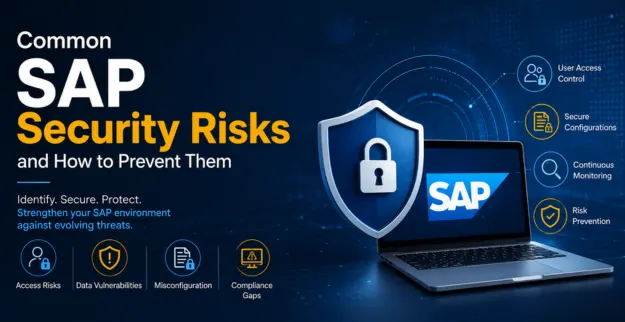
Common SAP Security Risks and How to Prevent Them
19 August 2026
Introduction
SAP systems manage critical business functions and sensitive information, including financial records, customer data, employee information, procurement, and supply chain operations. Because of this, SAP environments are valuable targets for cybercriminals and unauthorized users.
Weak access controls, outdated systems, misconfigurations, and poor monitoring can expose organizations to significant security risks. A strong SAP Security strategy helps businesses protect their SAP environment, reduce vulnerabilities, and maintain business continuity. Implementing effective SAP Security Best Practices is essential for organizations that depend on SAP for their daily operations.
SAP Security Overview
SAP Security involves protecting SAP applications, databases, users, interfaces, and business data from unauthorized access and cyber threats.
A comprehensive SAP security program typically includes:
User and role management
Authentication and access controls
Authorization management
Data protection
System configuration security
Patch and update management
Security monitoring
Audit and compliance controls
Effective SAP Cyber Security requires continuous assessment because risks can change as systems, users, applications, and business processes evolve.
Common Risks
1. Excessive User Privileges
Users may receive more permissions than required for their responsibilities. Excessive privileges can increase the risk of unauthorized transactions or data access.
2. Weak Password Policies
Weak, reused, or compromised passwords can allow attackers to gain unauthorized access to SAP accounts.
3. Poor Role Configuration
Incorrectly configured roles can create authorization conflicts and allow users to perform sensitive activities without appropriate approval.
4. Unpatched SAP Systems
Delayed security updates can leave SAP applications and underlying components exposed to known vulnerabilities.
5. Insecure Interfaces
SAP systems often connect with third-party applications and external platforms. Poorly secured interfaces can become entry points for attackers.
6. Misconfigured SAP Environments
Incorrect system settings, exposed services, and unnecessary access can create security weaknesses.
7. Insider Threats
Employees or contractors with legitimate access may intentionally or accidentally expose sensitive SAP information.
8. Insufficient Monitoring
Without appropriate logging and monitoring, suspicious activities may remain unnoticed, delaying investigation and response.
Prevention
Organizations should adopt a layered approach to SAP Cyber Security.
Recommended Security Measures
-
Apply SAP security patches and updates promptly
-
Implement strong authentication and Multi-Factor Authentication (MFA)
-
Follow the principle of least privilege
-
Regularly review SAP roles and authorizations
-
Separate conflicting business responsibilities
-
Secure SAP interfaces and integrations
-
Encrypt sensitive information where appropriate
-
Conduct regular vulnerability assessments and security audits
-
Maintain secure backup and recovery procedures
-
Provide security awareness training for SAP users
These measures help reduce the attack surface and strengthen the overall SAP environment.
Monitoring
Continuous monitoring is an important part of effective SAP Security.
Organizations should monitor:
-
Failed and unusual login attempts
-
Privileged user activities
-
Changes to critical configurations
-
Suspicious transactions
-
Unauthorized access attempts
-
System and application logs
-
Security alerts and vulnerabilities
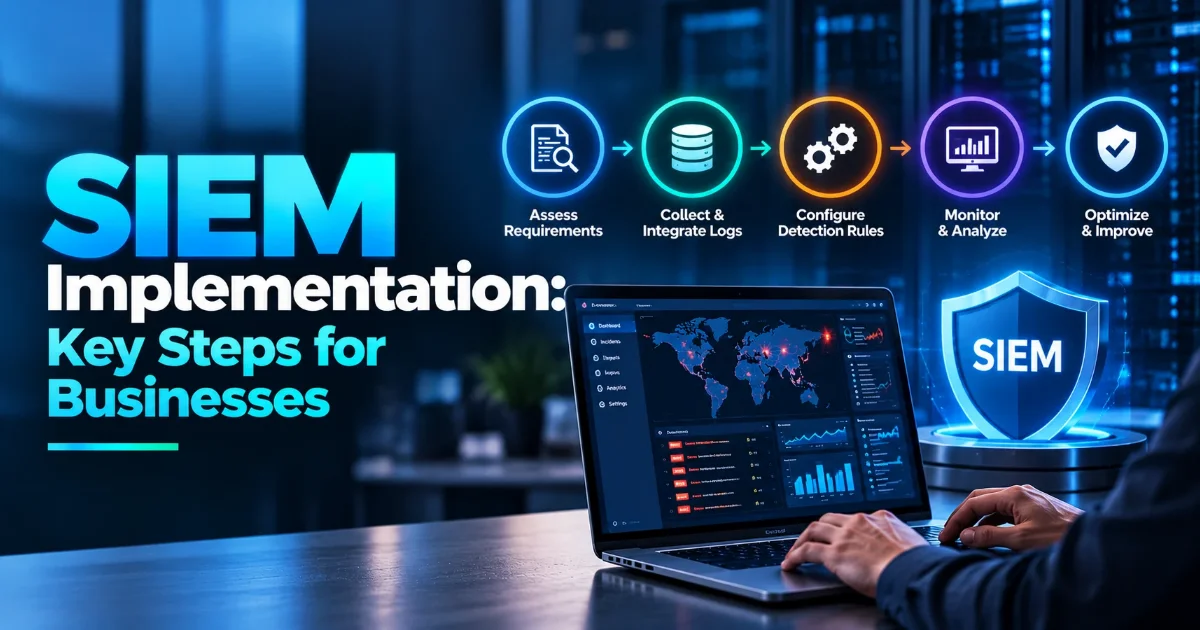
Integrating SAP security events with centralized security monitoring or a Security Information and Event Management (SIEM) solution can provide better visibility and help security teams identify suspicious behavior more quickly.
Regular security reviews should also be conducted to identify new risks and verify that security controls remain effective.
Conclusion
SAP systems contain some of an organization's most valuable business information, making SAP Security Risks a serious business concern. Excessive privileges, weak authentication, unpatched systems, insecure interfaces, misconfigurations, and inadequate monitoring can expose critical SAP environments to cyber threats.
By implementing strong SAP Security Best Practices, regularly reviewing access controls, applying security updates, and continuously monitoring SAP activity, organizations can significantly strengthen their SAP Cyber Security posture.
A proactive approach to SAP security not only protects sensitive data but also supports business continuity, regulatory compliance, and long-term operational resilience.
CTA
Protect your SAP environment from evolving security threats.
Agan Cyber Security LLC provides professional SAP Security, security assessment, monitoring, vulnerability management, and cybersecurity solutions to help organizations protect critical SAP systems and business data.
Contact us today to strengthen your SAP security and reduce cyber risks.