Common SIEM Challenges and How to Overcome Them
By:
Ganesan D
5 Oct 2026
Category:
Cyber Security
Introduction
Security Information and Event Management (SIEM) has become an important component of modern Security Operations. By collecting and analyzing security events from endpoints, servers, networks, applications, and cloud environments, SIEM helps security teams identify potentially suspicious activity.
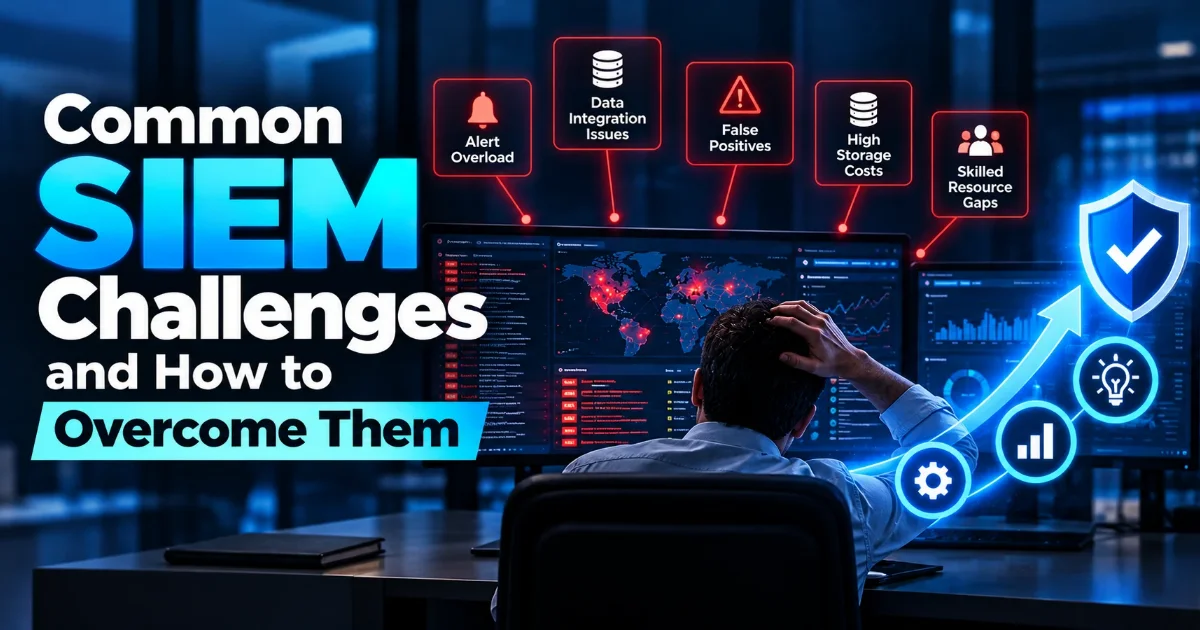
However, implementing a SIEM platform does not automatically guarantee effective threat detection. Organizations may face challenges such as excessive alerts, false positives, complex data integration, increasing storage costs, and a shortage of skilled security professionals.
Understanding these challenges can help businesses build a more effective SIEM and SOC strategy and get greater value from their security monitoring investments.
Alert Overload
One of the most common SIEM challenges is overloading alerts. A SIEM can generate a large number of alerts from multiple systems, making it difficult for security analysts to determine which events require immediate attention.
Practical Solution
Organizations should prioritize alerts based on severity, asset importance, threat context, and business impact. Detection rules should also be regularly reviewed and tuned to reduce unnecessary notifications.
Automating repetitive investigation and response tasks can further help security teams focus on high-priority incidents.
False Positives
False positives occur when a SIEM identifies legitimate activity as potentially malicious. A high number of false positives can consume analyst time and contribute to alert fatigue.
Practical Solution
Security teams should continuously tune detection rules based on their environment. Known legitimate activities can be documented and appropriately excluded or handled differently, while important detection conditions should remain active.
Regular analysis of alert performance can help improve the accuracy of SIEM detections.
Data Integration Challenges
A SIEM needs security data from different sources to provide meaningful visibility. Organizations may have firewalls, endpoints, cloud platforms, applications, identity systems, and security tools from different vendors.
Integrating these sources can be technically complex, particularly in hybrid environments.
Practical Solution
Businesses should prioritize critical log sources rather than attempting to integrate everything at once. They should establish a structured onboarding process and verify that logs are being collected, parsed, normalized, and retained correctly.
For organizations asking What is Cloud SIEM, cloud-based SIEM platforms can provide centralized monitoring across cloud infrastructure and services, although integration and configuration still require careful planning.
Storage and Costs
SIEM platforms can process significant volumes of security data. As the number of log sources and retention periods increase, organizations may face higher storage, processing, and licensing costs.
Practical Solution
Organizations should classify data based on security importance and determine appropriate retention periods. High-value security logs can receive longer retention, while less important data may require shorter periods.
Lack of Skilled Resources
Effective SIEM management requires security expertise. Teams need professionals who can configure detection rules, investigate alerts, tune the platform, analyze logs, and respond to incidents.
Practical Solution
Businesses can invest in security training, establish documented monitoring procedures, and automate repetitive tasks where appropriate.
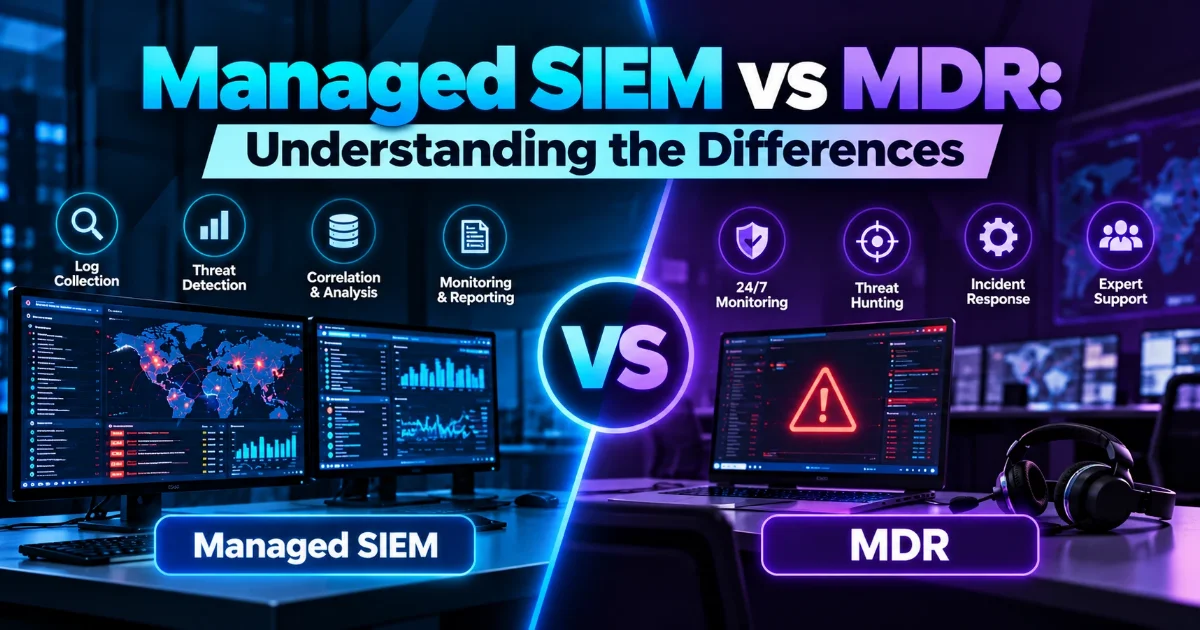
Organizations that do not have sufficient internal resources may also consider a Managed SOC, where security professionals monitor and investigate alerts on their behalf.
SIEM and SOC Integration
A SIEM becomes more effective when it is properly integrated into SIEM and SOC operations. SIEM provides centralized security data and detection capabilities, while SOC analysts use those alerts and supporting information to investigate and respond to potential incidents.
A structured workflow can follow:
SIEM Detection → Alert Prioritization → SOC Investigation → Incident Response → Review and Tuning
Regular communication between SIEM administrators and SOC analysts can help improve detection quality and reduce unnecessary alerts.
Best Practices for Overcoming SIEM Challenges
Organizations can improve their SIEM operations by:
- Prioritizing critical log sources
- Regularly tuning detection rules
- Reducing unnecessary alerts
- Establishing clear incident response procedures
- Monitoring data ingestion and storage costs
- Reviewing detection performance regularly
- Training security personnel
These practices can help businesses maintain a more efficient and focused Security Operations environment.
Conclusion
SIEM can provide valuable visibility across an organization's IT environment, but successful implementation requires continuous management. Alert overload, false positives, data integration challenges, storage costs, and limited skilled resources can reduce the effectiveness of a SIEM if they are not addressed properly.
By tuning detection rules, prioritizing important data, managing storage strategically, improving staff capabilities, and integrating SIEM with SOC processes, organizations can make their security monitoring more efficient.