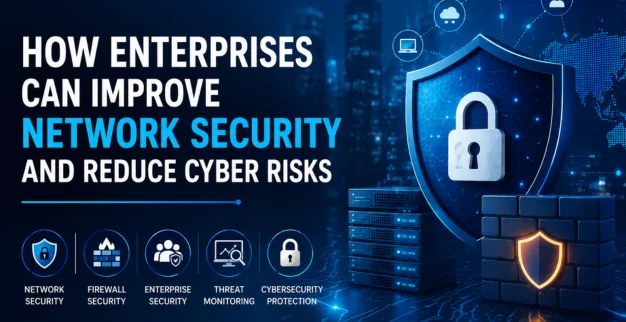
How Enterprises Can Improve Network Security and Reduce Cyber Risks
25 May 2026
Modern enterprises rely heavily on digital infrastructure, cloud platforms, and interconnected systems to manage daily operations. While technology improves efficiency and scalability, it also increases exposure to cyber threats such as ransomware, phishing attacks, insider threats, and unauthorized access.
Strong network security is essential for protecting sensitive information, maintaining operational continuity, and strengthening overall enterprise security. Organizations that fail to implement proper cybersecurity protection strategies face increased risks of data breaches, financial losses, and reputational damage.
What is Network Security
Network security refers to the processes, technologies, and controls used to protect enterprise networks, systems, and data from unauthorized access and cyberattacks.
The primary goals of network security include:
- Preventing unauthorized access to systems
- Detecting and responding to cyber threats
- Protecting sensitive business information
- Maintaining system availability and reliability
- Supporting business continuity and resilience
Strong network security forms the foundation of effective enterprise cybersecurity.
How Enterprises Improve Network Security
1. Implementing Firewall Security
Firewall security is one of the most important components of enterprise cybersecurity protection.
Firewalls help organizations:
- Block unauthorized network access
- Monitor incoming and outgoing traffic
- Detect suspicious network activity
- Prevent malware and malicious traffic
- Improve visibility into network communications
Modern enterprises often use next-generation firewalls (NGFWs) and cloud-based firewalls to strengthen security controls.
2. Strengthening Access Control
Enterprises improve enterprise security by controlling who can access systems and sensitive information.
- Multi-factor authentication (MFA) reduces unauthorized access
- Role-based access control limits user permissions
- Password management policies improve account security
- Privileged access monitoring strengthens governance
- User activity tracking helps detect insider threats
Strong access management significantly reduces cybersecurity risks.
3. Continuous Network Monitoring
Continuous monitoring helps organizations identify threats before they cause damage.
- Security Information and Event Management (SIEM) tools improve visibility
- Intrusion detection systems identify suspicious activities
- Real-time alerts support rapid incident response
- Traffic analysis helps identify abnormal behavior
- Continuous monitoring improves threat detection accuracy
Proactive monitoring enables faster detection and response to cyber incidents.
4. Vulnerability Management and Patching
Unpatched systems are one of the most common causes of cybersecurity breaches.
- Regular vulnerability assessments identify security gaps
- Security patches reduce exploit risks
- Endpoint protection improves device security
- Asset management helps track vulnerable systems
- Automated updates improve operational efficiency
Effective patch management reduces exposure to cyberattacks.
5. Employee Cybersecurity Awareness
Human error remains a major cybersecurity risk for enterprises.
- Employees learn to identify phishing attacks
- Awareness training improves safe security practices
- Staff understand proper data handling procedures
- Incident reporting becomes more effective
- Security culture improves across the organization
Cybersecurity awareness strengthens organizational defense against social engineering attacks.
Importance of Cybersecurity Protection
Strong cybersecurity protection helps enterprises:
- Reduce operational and financial risks
- Protect sensitive customer and business data
- Improve business continuity and resilience
- Support compliance and regulatory requirements
- Enhance customer trust and confidence
Organizations with strong security programs are better prepared to manage evolving cyber threats.
Real-Time Issues Faced by Businesses
- Increasing ransomware and malware attacks
- Weak firewall configurations and outdated systems
- Poor visibility into network activity
- Lack of employee cybersecurity awareness
- Difficulty managing remote work and cloud security
These challenges increase the likelihood of security breaches and operational disruptions.
Example:
A company experienced repeated phishing and ransomware incidents because of weak firewall security and poor network segmentation. After improving network security, implementing continuous monitoring, and strengthening overall enterprise security, the organization significantly reduced cyber incidents and improved operational stability.
Conclusion
Strong network security is essential for protecting modern enterprises from evolving cyber threats. By improving enterprise security, strengthening firewall security, and implementing proactive cybersecurity protection strategies, organizations can reduce operational risks and improve long-term resilience.
Businesses that prioritize network security are better prepared to maintain secure, reliable, and resilient operations in today’s digital environment.