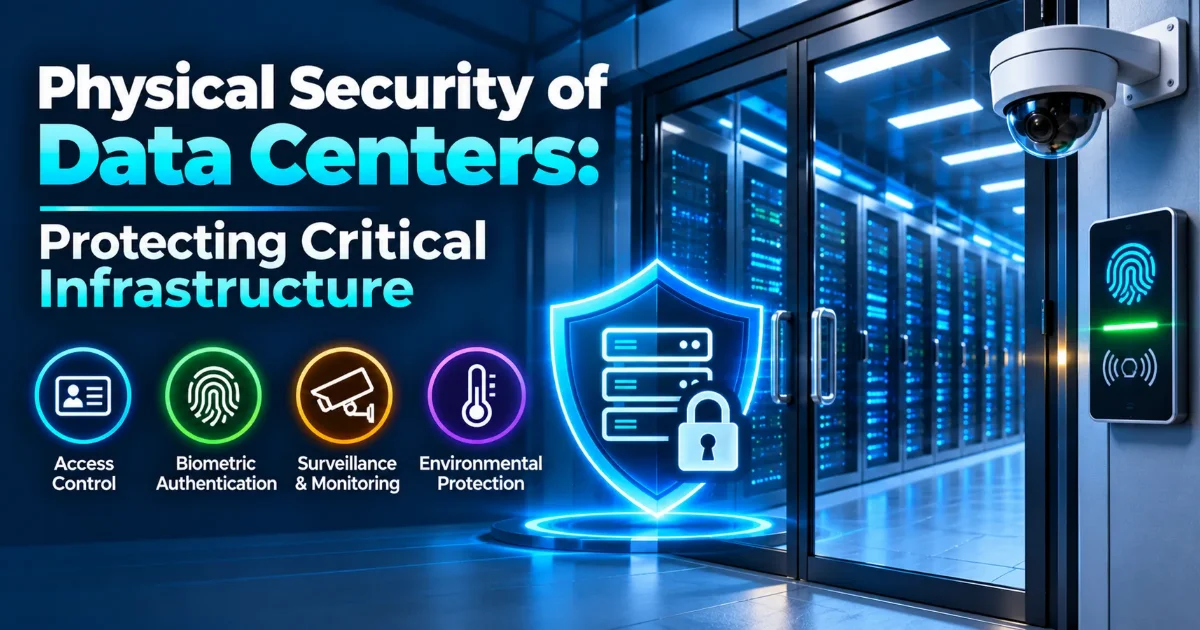
Physical Security of Data Centers: Protecting Critical Infrastructure
By: Ganesan D
6 Nov 2026
Category:
Cyber Security
Introduction
Data centers support essential business operations by hosting servers, applications, databases, and critical digital infrastructure. While cybersecurity protects systems from digital threats, physical security prevents unauthorised individuals from accessing sensitive equipment and facilities. A strong physical security strategy helps maintain data protection, operational continuity, and infrastructure reliability.
What Is Data Center Physical Security?
Data center physical security involves protecting facilities, equipment, network infrastructure, and supporting systems against unauthorised access, theft, damage, and environmental threats.
It combines physical access controls, surveillance, visitor management, environmental monitoring, and emergency protection measures.
Effective data centre access control in Dubai helps organisations secure critical infrastructure and maintain controlled access to sensitive areas.
Threats to Critical Infrastructure
Data centers face several physical security risks, including:
-
Unauthorised Entry:
Intruders attempting to access restricted areas.
-
Equipment Theft:
Theft of servers, storage devices, or networking equipment.
-
Insider Threats:
Employees or contractors misusing authorised access.
-
Vandalism and Sabotage:
Intentional damage to infrastructure.
-
Environmental Incidents:
Fire, water leaks, overheating, and power failures.
-
Natural Disasters:
Flooding, extreme weather, or other location-specific hazards.
These threats can result in data loss, service interruptions, financial damage, and reputational harm.
Unauthorised Access and Insider Risks
Unauthorised access is a major concern because physical access to servers and networking equipment may allow attackers to disconnect devices, steal storage media, or tamper with infrastructure.
Insider risks can also arise when employees, contractors, or service providers have excessive access privileges or when access permissions are not updated after role changes.
Businesses should enforce individual access credentials, maintain entry records, review permissions regularly, and ensure visitors remain authorised and supervised.
Access Control and Biometric Authentication
Access control systems help restrict entry to approved individuals based on their roles and responsibilities.
Common security measures include:
-
Access Cards:
Allow authorised personnel to enter designated areas.
-
Biometric Authentication:
Uses fingerprints, facial recognition, or other biometric identifiers for identity verification.
-
PIN-Based Access:
Adds another verification method where appropriate.
-
Multi-Factor Authentication:
Combines multiple authentication methods for sensitive entry points.
-
Mantrap Systems:
Use controlled entry spaces to reduce tailgating and unauthorised entry.
A well-designed data center visitor management system in the UAE can also record visitor details, approval status, entry times, and exit activities.
Surveillance and Environmental Monitoring
Surveillance systems provide visibility into activities across data center facilities. CCTV cameras can monitor entrances, server rooms, loading areas, and restricted zones.
Environmental monitoring helps detect conditions that could damage critical equipment. Important monitoring capabilities include:
- Temperature and humidity monitoring.
- Smoke and fire detection.
- Water leak detection.
- Power and cooling system alerts.
- Equipment room access notifications.
Combining surveillance with real-time alerts helps security teams investigate unusual activity and respond to potential incidents.
Power, Fire and Disaster Protection
Data centers require reliable power and environmental protection to maintain continuous operations.
Essential safeguards include:
-
Uninterruptible Power Supply (UPS):
Provides temporary backup power during interruptions.
-
Backup Generators:
Support operations during extended power failures.
-
Fire Detection and Suppression:
Detect and control fire incidents using systems suitable for data center environments.
-
Cooling Systems:
Maintain appropriate operating temperatures.
-
Disaster Recovery Planning:
Establishes procedures for restoring critical infrastructure after major incidents.
Regular inspections and testing help ensure these systems function as expected.
Physical Security Best Practices
Businesses should follow these practices to strengthen facility protection:
-
Implement layered access controls for different security zones.
-
Use biometric authentication or MFA for highly restricted areas.
-
Maintain accurate employee and visitor access records.
-
Monitor CCTV systems and investigate unusual activity.
-
Review access permissions and remove inactive credentials.
-
Test fire protection, backup power, and environmental monitoring systems.
-
Conduct regular physical security assessments and emergency drills.
A comprehensive data center physical security strategy across the MEA region should address both facility-specific risks and operational requirements. Organisations responsible for critical infrastructure security in Dubai should also coordinate physical security with cybersecurity and incident response teams.
Frequently Asked Questions
1. Why Is Physical Security Important for Data Centers?
It prevents unauthorised access, equipment theft, sabotage, and environmental damage that could disrupt critical services.
2. Is Biometric Authentication Enough to Secure a Data Center?
No. Biometrics should complement access cards, multi-factor authentication, surveillance, visitor controls, and regular access reviews.
3. How Often Should Data Center Physical Security Be Assessed?
Assessments should be conducted regularly and whenever infrastructure, access requirements, or facility risks change.
Conclusion
Physical security is essential for protecting data centers and critical infrastructure from unauthorised access, insider threats, and environmental incidents. Combining access control, biometric authentication, surveillance, and disaster protection helps businesses maintain secure and reliable operations.
Protect Your Critical Infrastructure with Agan Cyber Security LLC
Protect your critical infrastructure with Agan Cyber Security LLC. Our cybersecurity services can help organisations assess security risks, strengthen monitoring, and improve infrastructure protection.
Contact our team to discuss your security requirements in Dubai and across the UAE.
Contact us today to discuss your security requirements.